As an Amazon Associate I earn from qualifying purchases. This page may contain affiliate links.
Texas oven-roasted beef brisket gives you the bold black pepper crust, beefy flavor and sliceable tenderness of a Texas-style smoked brisket, using nothing more than your oven and a heavy roasting pan. In this guide you will pick the right cut, season it with a classic salt-and-pepper rub, roast it low and slow until the connective tissue breaks down, and rest it properly so every slice stays juicy. Expect a full day of hands-off time, not a rushed weeknight dinner.
What You Need Before You Start
Brisket is a forgiving cut, but it rewards preparation. Gather everything before the meat goes in, because pulling a brisket out of the oven to find a missing tool is how good cooks end up with dry meat.
Shopping for one? See our guide: Is Brisket Beef or Pork? Key Differences Explained (2026).
- A whole packer brisket, 10 to 13 pounds, with a flat and point still attached
- Coarse kosher salt and coarsely ground black pepper (equal parts by weight is a common Texas starting point)
- Optional: garlic powder, smoked paprika or cayenne for color and depth
- A heavy roasting pan with a rack, or a deep half sheet pan
- Aluminum foil or butcher paper
- A leave-in or instant-read meat thermometer
- A sharp slicing knife and a cutting board with a groove
Step 1: Choose and Trim the Brisket
Look for a packer brisket with a fairly even thickness and a fat cap of about a quarter inch. Too much fat keeps the seasoning from reaching the meat, and too little leaves the brisket prone to drying out in a dry oven environment.
Trimming the Fat Cap
Set the brisket fat side up. Trim the hard, waxy fat down to roughly 1/4 inch, leaving a uniform layer. Remove any loose, silver-skin patches and thick pockets of fat between the flat and point. Avoid cutting into the meat itself.
Let It Come to Room Temperature
Pull the brisket from the refrigerator 60 to 90 minutes before cooking. A cold center cooks unevenly and extends the time the outer layers spend in the danger zone.
Step 2: Season the Brisket
Texas-style seasoning is famously simple. Mix coarse kosher salt and coarsely cracked black pepper in roughly a 1:1 ratio, then add garlic powder if you like. Apply a thin, even coat to all sides, pressing it in gently. Many cooks season the night before and refrigerate uncovered, which dries the surface and helps form a better bark.
Step 3: Set Up the Oven for Low, Steady Heat
Set the oven to 250 to 275 degrees Fahrenheit. Lower temperatures take longer but give collagen more time to convert to gelatin, which is what makes brisket tender instead of chewy. Place a rack in the lower-middle position so the roasting pan sits centered and the heat circulates evenly.
Put the brisket fat side up in the pan. If your pan is deep, add about half an inch of water or beef broth to the bottom to add humidity and prevent the drippings from scorching.
Step 4: Roast Low and Slow
Roast uncovered until the surface develops a dark mahogany color and a firm bark, usually 3 to 4 hours. Then wrap the brisket tightly in foil or butcher paper, which speeds the cook by trapping moisture and pushing the stall past the point where evaporative cooling stops progress.
Timing by Weight
As a rough guide, plan on about 1 to 1.5 hours per pound at 250 to 275 degrees, but always rely on temperature rather than the clock. Your brisket is ready when the thickest part of the flat reaches an internal temperature of about 195 to 205 degrees Fahrenheit and a probe slides in with almost no resistance, like into soft butter.
| Brisket Weight | Approximate Total Time at 250 to 275 F | Target Internal Temperature |
|---|---|---|
| 8 to 10 lb | 8 to 12 hours | 195 to 205 F |
| 10 to 13 lb | 10 to 14 hours | 195 to 205 F |
| 13 to 15 lb | 12 to 16 hours | 195 to 205 F |
Times vary with the oven, the cut’s thickness and the starting temperature, so treat these as estimates and probe early.
Step 5: Rest the Brisket
Resting is not optional. When the brisket comes out, keep it wrapped and set it in a dry cooler or on a cutting board covered with a towel for at least one hour, and up to three or four hours if you wrapped it well. During this time, juices redistribute and the meat firms up enough to slice cleanly. Skipping the rest is the single most common reason a brisket looks good and eats dry.
Step 6: Slice Against the Grain
Unwrap the brisket and pour the rendered juices into a container. Separate the flat from the point along the seam of fat. Slice the flat against the grain into pencil-thick slices, about 1/4 inch. The point can be sliced thicker or cubed for chopped brisket. Serve with the reserved juices, skimmed of excess fat, spooned over the top.
Tips for Better Results
- Use a probe thermometer and check the flat in more than one spot. The point usually runs hotter and can be done before the flat.
- Keep the oven steady. Use an oven thermometer, because many home ovens run 15 to 25 degrees off the dial.
- Wrap the brisket once it reaches a dark, firm bark, not earlier, or the bark will go soft.
- Consider a brisket that’s 2 inches thick or more at the flat. Thin ends can dry out before the center is ready, so you may want to tuck the thin tip under.
- Save the rendered fat and drippings. They make excellent gravy, beans or fried potatoes.
Common Mistakes
- Cooking at too high a temperature. Going above 300 degrees tightens the muscle fibers before the collagen can break down, which leaves you with tough meat.
- Pulling it by time alone. A brisket can take two hours longer or shorter than the estimate. Only probe tenderness and internal temperature can tell you when it is done.
- Trimming away too much fat. The fat cap protects the meat and carries flavor. Keep a quarter inch.
- Slicing too soon. Cutting before the rest lets juices run out onto the board.
- Slicing with the grain. Slicing parallel to the muscle fibers produces stringy, chewy pieces even when the meat is tender.
Recommended gear
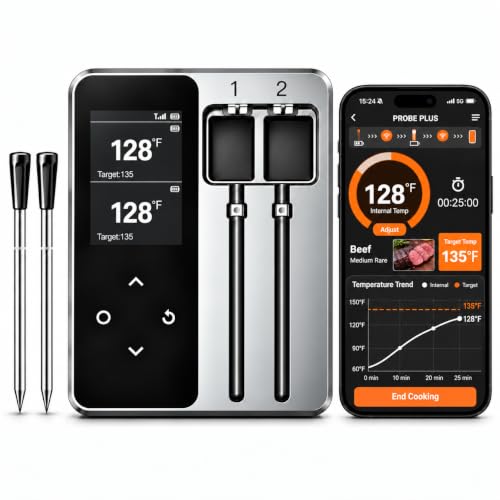
A leave-in probe thermometer lets you track the flat and point without opening the oven door, which keeps the cooking environment stable. Search for a dual-probe wireless model so you can monitor both sections at once.
An oven thermometer is inexpensive insurance against a dial that reads hotter or cooler than the actual cavity temperature, which matters for a 12-hour cook.
View on AmazonA heavy roasting pan with a rack lets air circulate under the brisket and catches the drippings without scorching them. A deep pan with a lid is more useful than a shallow tray.
View on AmazonButcher paper is the traditional wrap for brisket because it lets the meat breathe while still retaining moisture, giving a firmer bark than foil.
View on AmazonFAQ
Can I make brisket in the oven without a smoker?
Yes. Roasting at 250 to 275 degrees with a salt-and-pepper rub produces a sliceable, tender brisket with a good bark. You will not get true wood-smoke flavor, but a little smoked paprika or liquid smoke can add depth if you want it.
Should I cook brisket fat side up or fat side down?
Most cooks start fat side up so the rendering fat bastes the meat as it cooks. Some prefer fat side down to protect the meat from direct heat, so either works if your pan is set up well.
Do I need to add liquid to the pan?
A shallow layer of water or broth helps keep the drippings from burning and adds some humidity. You do not need to submerge the meat, and wrapping the brisket later provides most of the moisture you need.
Why is my brisket tough even though it reached temperature?
Temperature alone is not enough. Collagen needs time at temperature to break down, so a brisket pulled at 190 degrees may still be chewy. Check for probe tenderness, which usually happens between about 195 and 205 degrees.
How long should I rest brisket before slicing?
At least one hour, wrapped and held in a dry cooler or covered on the counter. Resting for two to three hours is common and often produces even juicier slices.
Can I cook brisket ahead of time and reheat it?
Yes. Cool the brisket, wrap it well and refrigerate it. Slice it cold or warm, then reheat gently with some of the reserved juices in a covered pan at around 275 degrees until hot throughout.
What is the difference between the flat and the point?
The flat is leaner and slices neatly, while the point has more marbling and fat and is ideal for chopped brisket or burnt ends. Both benefit from the same low, slow cook.
Is brisket the same as corned beef?
No. Corned beef is brisket that has been cured in a salt brine, which changes its flavor and texture. Texas oven-roasted brisket is an uncured cut seasoned only with salt and pepper.
Conclusion
A well-made texas oven-roasted beef brisket comes down to four things: choosing a good packer, seasoning simply, roasting low and slow, and resting long enough before slicing. Cook to temperature and tenderness rather than the clock, and slice against the grain. With patience and a reliable oven thermometer, you can serve Texas-style brisket at home any time of year.