As an Amazon Associate we earn from qualifying purchases. This page may contain affiliate links.
Learning how to cook brisket in oven is a practical skill for anyone without an offset smoker or pellet grill. A 275°F oven, a dry rub, a covered pan and a reliable thermometer can turn a tough packer or flat cut into sliceable, juicy beef. Expect a total cook of roughly 1 to 1.5 hours per pound, plus a long rest. The meat is done when a probe slides in with almost no resistance, not when a timer goes off.
The oven won’t give you real smoke flavor, but it does give you steady, even heat that is easy to control. Most of the work is in trimming, seasoning and monitoring the internal temperature. This guide walks through each stage in order.
What You Need Before You Start
Gather everything before the meat comes out of the fridge. A brisket spends several hours in the oven, and running to find a pan or thermometer mid-cook is how mistakes happen.
- A whole packer brisket (10 to 14 lb) or a flat cut (4 to 7 lb). Flats are leaner and cook faster; packers include the point and more fat.
- A heavy roasting pan with a rack, or a large Dutch oven with a lid.
- Heavy-duty aluminum foil or pink butcher paper for wrapping.
- A leave-in probe thermometer and an instant-read thermometer.
- Kosher salt, coarse black pepper, garlic powder, smoked paprika and brown sugar for a basic rub.
- Beef broth or stock, about 1 to 2 cups, for braising liquid.
- A cutting board with a juice groove and a sharp long slicing knife.
If you want a complete rub recipe with ratios, see How to Make a Dry Rub for BBQ from Scratch. The approach below works with any reasonable rub.
How to Cook a Brisket in the Oven: Step by Step
Step 1: Trim the Fat Cap
Pull the brisket out of the packaging and pat it dry. Look at the fat cap on top. Trim it down to about 1/4 inch thick, removing any hard or silver-colored patches. Leave the fat on the top; it bastes the meat as it renders. Remove large hard fat deposits on the underside and between the flat and point.
Trimming matters because thick fat blocks seasoning and can keep the rub from forming a bark. It also makes the finished brisket greasy instead of silky.
Step 2: Season the Meat
Apply a generous, even coat of seasoning. A common starting point is about 1 tablespoon of kosher salt per pound of meat, though many cooks use a little less if the rub contains salt. Work the rub into every surface, including the sides. Rest the seasoned brisket uncovered in the fridge for at least 4 hours, or overnight. This gives the salt time to penetrate and the surface time to dry slightly.
Pull the brisket out about 30 minutes before cooking so it loses some of its chill. Cold meat cooks unevenly at the start.
Step 3: Set Up the Oven and Pan
Preheat the oven to 275°F. Some cooks use 250°F for a longer, gentler cook, and 300°F if the schedule is tight. Lower temperatures render more fat and produce more tender results, but they add hours. Place a rack in the center of the oven.
Set the brisket fat side up on the rack inside a roasting pan. Pour broth into the bottom of the pan, about 1/2 inch deep, not over the meat. The liquid keeps the pan humid and helps prevent the surface from drying out. Insert the leave-in probe into the thickest part of the flat, away from the fat and any bone or hard spots.
Step 4: Cook Uncovered Until the Bark Sets
Cook the brisket uncovered for the first 2 to 3 hours, or until the surface is deep mahogany and the internal temperature reaches about 160°F to 165°F. The rub will darken and firm up. Don’t open the oven more than necessary.
Step 5: Wrap to Get Through the Stall
Around 160°F to 170°F, the internal temperature often plateaus for an hour or more. This is normal. Connective tissue is breaking down, and moisture evaporating from the surface cools the meat. To push through, wrap the brisket tightly in two layers of heavy foil or pink butcher paper. Foil speeds the cook and softens the bark; butcher paper preserves more crust. Either works.
Return the wrapped brisket to the oven. Add a splash of broth to the pan if it looks dry. Continue cooking until the probe slides into the flat with little resistance, usually between 195°F and 205°F. Many cooks pull at around 200°F, but feel matters more than the number alone.
Step 6: Rest Before Slicing
Remove the brisket from the oven and keep it wrapped. Let it rest at least 1 hour, and up to 2 hours if you wrap it in towels and set it in a dry cooler. Resting lets juices redistribute and keeps the slices from drying out on the board. Skipping this step is the most common reason a good brisket turns out dry.
Slice across the grain. Flats are typically cut into pencil-thick slices. For a packer, separate the point from the flat first, then slice the flat across the grain and cut the point into cubes or thicker slices.
Brisket Oven Timing and Temperature Reference
These ranges are general guidelines. Thickness, fat content and oven accuracy all change the timing, so use the probe as your final authority.
| Stage | Internal Temp | Approximate Time (per lb) | What to Look For |
|---|---|---|---|
| Uncovered bark-setting phase | up to 165°F | about 20 to 30 minutes | Dark, dry surface; rub has set |
| Stall | 165°F to 175°F | variable, often 1 to 2 hours total | Temperature stops climbing |
| Wrapped finish | 195°F to 205°F | remaining time, often 1 hour per lb or more overall | Probe slides in like soft butter |
| Rest | Falling slowly | 1 to 2 hours | Juices settle; slices hold together |
For accurate readings, calibrate your probe in ice water before cooking and check that the oven runs true with a separate oven thermometer. For more on reading temperatures during a cook, see How to Use an Instant-Read Thermometer for Perfect BBQ.
Recommended Gear
A few inexpensive tools make the oven method far more predictable.
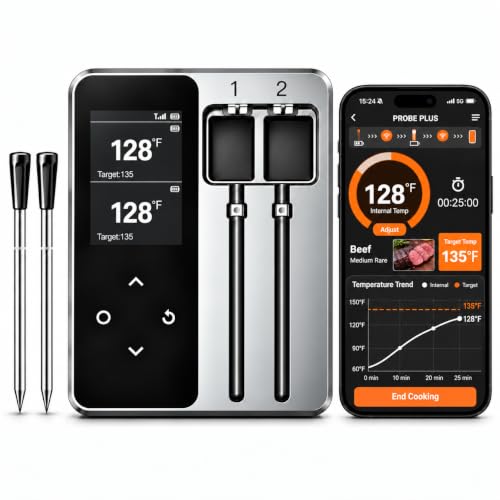
- Leave-in probe thermometer: Lets you track internal temperature without opening the oven door, which keeps the heat steady. Check price on Amazon
- Heavy roasting pan with rack: The rack keeps the brisket out of its drippings so the bottom doesn’t steam, and the high sides hold braising liquid. Check price on Amazon
- Pink butcher paper: Lets the brisket breathe during the wrap, so the bark stays firmer than it would in foil. Check price on Amazon
- Instant-read thermometer: Good for spot-checking the flat and the point, which can differ by several degrees. Check price on Amazon
Common Mistakes to Avoid
- Cooking to time instead of temperature. A brisket can take 2 hours longer or shorter than the estimate. Probe tenderness is the real test.
- Pulling it too early. If the probe still meets resistance, it isn’t done, even if the internal temperature looks right.
- Wrapping too soon. Wrapping before the bark sets softens the crust. Wait until the surface is dark and firm.
- Skipping the rest. A short rest leads to dry slices and a puddle on the board.
- Slicing with the grain. Cutting parallel to the muscle fibers makes even tender meat feel chewy.
- Letting the pan dry out. Check the liquid level during the wrapped phase and add broth as needed.
Food safety matters too. Hold cooked brisket above 140°F during service, or refrigerate leftovers within two hours of cooking. Reheat leftovers until they reach 165°F. If you have health conditions or questions about food handling, check with a registered dietitian or your local food safety authority.
If you want a smoky flavor, a little smoked paprika in the rub or a few drops of liquid smoke in the braising liquid can help. Go light, because liquid smoke is strong. For more on building smoke flavor on other cooking setups, see How to Control Smoke Flavor Intensity on Your Grill.
Brisket is one of several large cuts that reward low, patient cooking. If you are comparing cuts, How to BBQ Different Beef Cuts: From Brisket to Ribeye covers which ones suit long cooks and which need quicker heat.
FAQ
What temperature should I cook brisket in the oven?
Most cooks use 250°F to 275°F. Lower temperatures produce more tender results but take longer. Hotter ovens, around 300°F, shorten the cook but can dry the meat if you’re not careful.
How long does brisket take in the oven?
Plan roughly 1 to 1.5 hours per pound at 275°F, plus at least an hour of rest. A 10-pound packer might need 12 to 15 hours. Use the probe to decide when it’s done.
What internal temperature is brisket done?
Most brisket is ready between 195°F and 205°F. The more important sign is tenderness: a probe should slide into the flat with little resistance.
Should I cook brisket covered or uncovered in the oven?
Start uncovered to set the bark, then wrap in foil or butcher paper once the surface is dark and the stall begins. Wrapping keeps moisture in and speeds the cook.
Why is my oven brisket tough?
The most common causes are pulling it too early, cooking too fast at a very high temperature, or slicing with the grain. Give it more time, probe for tenderness, and cut across the muscle fibers.