As an Amazon Associate we earn from qualifying purchases. This page may contain affiliate links.
Knowing how to cook beef brisket comes down to four things: buy a well-marbled packer, trim and season it properly, cook it low and slow to an internal temperature around 195–205°F, and rest it long enough for the juices to settle. Follow those steps and you’ll end up with a bark that’s crisp and peppery, a smoke ring you can see from across the table, and slices that hold together without falling apart. This guide covers each stage in order, with the numbers you need and the mistakes that trip up most first-time cooks.
What You Need Before You Start
Brisket is a tough cut from the lower chest of the cow. It’s packed with connective tissue, and that collagen only turns tender after a long stretch at low heat. Plan on the cook taking most of a day, and build your timeline backward from dinner.
Choosing the right brisket
Most home cooks buy a whole packer brisket, which includes both the flat (the leaner, sliceable part) and the point (the fattier, more marbled part). Packers typically weigh somewhere between 10 and 16 pounds. Look for these traits:
- Even thickness: A flat that tapers unevenly will cook unevenly, so the thin end can dry out while the thick end is still tight.
- A flexible feel: Lift the brisket by one corner. A good one bends noticeably. A stiff one often has less fat and less connective tissue to melt.
- A fat cap of about a quarter inch: Some butchers trim it thinner. Less than that and the meat can dry out. More than that and the fat won’t render well.
- Good marbling in the point: White flecks of intramuscular fat help keep the point moist.
Tools and supplies checklist
- A smoker, pellet grill, or charcoal setup that holds 225–275°F for 10 hours or more
- A reliable instant-read thermometer and, ideally, a leave-in probe
- Sharp boning or trimming knife
- Kosher salt and coarse black pepper (or a dry rub)
- Wood chunks or chips such as oak, hickory, or pecan
- Butcher paper or heavy-duty aluminum foil for wrapping
- A clean cooler, large towels, or an oven set to its lowest setting for resting
How to Cook a Beef Brisket Step by Step
Step 1: Trim the brisket
Set the brisket fat side up and remove any hard, silver-skin-like membrane on the underside. Trim the fat cap down to about a quarter inch, keeping it even across the surface. Cut away loose hunks of fat and any dark, bloody spots. Leave the fat between the flat and point alone, because it renders into the meat during the cook. Trimming too aggressively is one of the fastest ways to end up with dry brisket.
Step 2: Season the meat
The classic Texas approach is coarse black pepper and kosher salt in roughly equal amounts by weight, applied generously on all sides. Some pitmasters add garlic powder or paprika, and others use a commercial brisket rub. If you prefer to mix your own, How to Make a Dry Rub for BBQ from Scratch explains how to balance salt, sugar, and spices. Press the seasoning gently into the surface, then let the brisket rest at room temperature for 30 to 60 minutes while your smoker comes up to temperature. For a bigger flavor push, you can season the night before and refrigerate it uncovered.
Step 3: Set up and stabilize the smoker
Target a steady cooking temperature between 225°F and 275°F. Many cooks land near 250°F because it balances render speed with bark development. If you’re new to your cooker, run it empty for an hour first to learn how it responds to vent adjustments. How to Set Up Your Smoker for the First Cook walks through that break-in process. Once the cooker is stable, keep the grate temperature steady by adjusting vents in small increments rather than making big swings.
Step 4: Add smoke and set the brisket on the grate
Place the brisket fat side up if your cooker’s heat comes from below, which helps the fat baste the meat. Fat side down is common on some pellet grills and offsets with direct heat, so match your setup to your cooker. Add wood once the fire is established and the smoke is thin and blue. Thick white smoke tastes bitter. How to Control Smoke Flavor Intensity on Your Grill covers how to manage that balance. Oak gives a clean, neutral smoke, hickory is stronger, and pecan lands in between.
Step 5: Manage the stall
Around 150–170°F internal, most briskets stop climbing for hours. This is the stall. It happens because moisture evaporating from the surface cools the meat, roughly matching the heat coming in. Don’t panic and crank the heat. You have two choices: wait it out, which can add several hours but gives the most bark, or wrap the brisket to push through faster. Wrapping in pink butcher paper preserves more bark than foil. Wrap when the bark is set and dark mahogany, usually around 160–170°F.
Step 6: Cook to tenderness, not just a number
Most briskets finish between 195°F and 205°F internal. The real test is feel. Slide a probe or thermometer into the thickest part of the flat. It should slide in with almost no resistance, like going into soft butter. If it still meets resistance, keep cooking and check again every 30 to 45 minutes. Some briskets finish at 190°F. Others need 210°F. Trust the probe test over the number alone.
As a rough planning guide, a packer at 250°F often takes about 1 to 1.5 hours per pound, but weather, thickness, and cooker type can shift that by hours. Start checking early, and plan for it to finish sooner or later than you expect.
Step 7: Rest the brisket
Resting is not optional. Pull the brisket when it’s tender, wrap it well in foil or butcher paper, and place it in a cooler lined with towels. Rest for at least one hour and up to four. The meat stays hot and the juices redistribute, which makes the slices far more moist. Many pitmasters consider a two-hour rest the sweet spot for a 12-pound packer.
Step 8: Slice against the grain
Separate the flat and point first. The point has grain running in different directions, so slice it across the grain in chunks or cubes. Slice the flat across the grain in pencil-thick slices, roughly 1/4 inch. Cut slices as you need them, since cold brisket reheats more gently when it’s still in larger pieces.
Quick Reference: Temperatures and Timing
| Stage | Target | What to watch for |
|---|---|---|
| Cooker temperature | 225–275°F (about 250°F common) | Steady grate reading; avoid big swings |
| The stall | About 150–170°F internal | Temperature plateaus for hours |
| Wrap point | About 160–170°F internal | Bark set and dark mahogany |
| Done | 195–205°F internal | Probe slides in like soft butter |
| Rest | 1–4 hours in a towel-lined cooler | Meat stays above 140°F |
Food safety note: keep brisket above 140°F during holding and cooling, and refrigerate leftovers within two hours of finishing. Cooking to the temperatures above is more than enough for safe doneness.
Common Mistakes to Avoid
- Cooking by time alone. Briskets vary widely. Use temperature and the probe-tender test.
- Running the cooker too hot. Temperatures above 300°F can tighten the meat and burn the bark before the collagen breaks down.
- Opening the lid constantly. Each peek drops the temperature and adds time. Check every hour or so unless you’re tracking the probe.
- Wrapping too early. If you wrap before the bark sets, you lose the crust you worked for.
- Skipping the rest. Slicing straight off the cooker is the most common reason brisket looks good and tastes dry.
- Slicing with the grain. Even tender brisket turns chewy when cut the wrong way.
- Trusting an uncalibrated thermometer. Check your thermometer in ice water (32°F) before the cook. How to Use an Instant-Read Thermometer for Perfect BBQ explains how to check accuracy and place the probe correctly.
Tips for Better Results
- Use a leave-in probe so you can watch the internal temperature without opening the cooker.
- Keep the fat side up on most offset and charcoal setups to baste the meat during the cook.
- Spritz lightly with water, apple juice, or beef broth only if the bark is getting too dark. Avoid over-spraying, which can soften the crust.
- If you’re cooking for a crowd, How to BBQ Different Beef Cuts: From Brisket to Ribeye compares brisket with other cuts so you can plan a full menu.
- Offset smokers reward careful fire management. Offset Smoker Pros, Cons, and How to Use One covers the fire-building habits that help.
- Maintain a steady cooker temperature across the full cook. Stable heat matters more than any single setting. How to Maintain a Steady Temperature in Your Smoker has practical adjustments for the most common swings.
Recommended Gear
A few tools make brisket far more predictable, especially for first-timers.
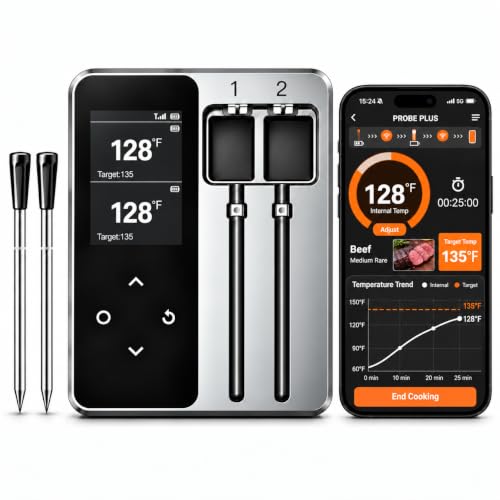
- Leave-in probe thermometer: A wired or wireless probe lets you track the flat’s temperature through the whole cook without lifting the lid. Look for one with a clear alarm for your target temperature. Check price on Amazon
- Pink butcher paper: It lets moisture escape while protecting the bark, which many pitmasters prefer over foil for wrapping. Check price on Amazon
- Instant-read thermometer: A fast, accurate handheld unit is useful for double-checking the probe test in several spots across the thickest part of the flat. Check price on Amazon
- Insulated cooler: A large cooler is the simplest way to hold a wrapped brisket hot for a long rest. Check price on Amazon
FAQ
What internal temperature should brisket reach?
Most briskets are done between 195°F and 205°F internal. The better sign is tenderness: the probe should slide into the thickest part of the flat with little resistance. Some briskets finish earlier and others later, so judge by feel as well as temperature.
How long does it take to cook a beef brisket?
At around 250°F, a packer often takes roughly 1 to 1.5 hours per pound, but the range is wide. Thickness, weather, and cooker type all affect timing. Plan for extra time, and keep the brisket in a cooler if it finishes early.
Should I wrap brisket in foil or butcher paper?
Both work. Foil cooks faster and softens the bark more, while butcher paper lets more moisture escape and keeps the bark firmer. Wrap once the bark is set, usually around 160–170°F internal.
Why does my brisket turn out dry?
The most common causes are cooking past the tender point, skipping the rest, slicing with the grain, or trimming away too much fat. Cooker temperatures that run too high can also dry out the lean flat before the connective tissue breaks down.
Can I cook a brisket in the oven?
Yes. Wrap the seasoned brisket in foil and roast at a low temperature, around 250°F, until it reaches the same 195–205°F range and feels tender. You won’t get true smoke flavor, so add liquid smoke sparingly or use a smoker box if you want more smoke character.