As an Amazon Associate I earn from qualifying purchases. This page may contain affiliate links.
Slow cooker beef brisket and onions is one of the most forgiving ways to turn a tough, collagen-rich cut into tender, sliceable meat with a rich onion gravy. You will season the brisket, build a bed of sliced onions, set the heat, and let the cooker do the work over 8 to 10 hours on low. The result is meat that pulls apart easily, with a jus that makes a great sauce for mashed potatoes or buns.
Why Slow Cooker Brisket and Onions Works
Brisket comes from the pectoral muscle of the cow, which means it gets a lot of exercise and carries a heavy load of connective tissue. That tissue is mostly collagen, and it only turns silky when held in the range of roughly 190°F to 205°F for a long time. A slow cooker on low typically holds the liquid near 200°F, which is the sweet spot for converting collagen into gelatin. The onions do double duty: they break down into a sweet base for the gravy and release moisture that keeps the meat from drying out.
Shopping for one? See our guide: 5 Best Slow Cooker Brisket Fall-Apart Tender Options in 2026.
If you are new to the cut itself, it helps to know the difference between the flat and the point. Our guide on How to Cook Beef Brisket: A Step-by-Step Guide for Beginners covers trimming and grain basics that apply here too.
Choosing and Prepping the Brisket
Buy a whole packer brisket or a flat in the 3 to 5 pound range for a standard slow cooker. A full packer often runs 10 to 14 pounds and will not fit in most units unless you cut it down. A flat is leaner and slices neatly; a point has more fat and shreds well. For this recipe, a flat with a fat cap of about a quarter inch is a good all-around choice.
Trim the fat cap to roughly 1/4 inch. Leaving some fat helps baste the meat, but thick slabs of hard fat will not render fully at slow cooker temperatures. Pull off any silver skin and hard pockets of fat. Pat the meat dry with paper towels before seasoning so the rub sticks.
Simple Seasoning Options
A basic rub of kosher salt, coarse black pepper, garlic powder, and smoked paprika works well. Use about 1 tablespoon of kosher salt and 1 tablespoon of coarse pepper for a 4 pound flat, then add 1 teaspoon each of garlic powder and smoked paprika. Press the rub into the meat on all sides. If you have time, let the seasoned brisket rest in the refrigerator for 4 to 12 hours; the salt will penetrate deeper and improve the flavor.
Preparing the Onions and Liquid
Slice 2 large yellow onions into half-moons about 1/4 inch thick. Yellow onions hold their shape and caramelize into sweetness during a long cook, while sweet onions can turn mushy. Spread the onions across the bottom of the slow cooker insert in an even layer. This creates a rack that keeps the brisket above the direct heat of the ceramic and gives you a built-in gravy base.
For liquid, use 1 cup of beef broth combined with 1/2 cup of dark beer or additional broth. Add 2 tablespoons of Worcestershire sauce, 2 minced garlic cloves, and 1 teaspoon of dried thyme. Pour the liquid around the sides of the brisket, not directly over the top, so the rub stays intact. Too much liquid will boil the meat and wash away the bark, so keep it to about 1 to 1 1/2 cups total.
Placing the Brisket
Set the seasoned brisket fat side up on top of the onions. If the brisket is too large, cut it in half across the grain and stack the pieces. Fat side up lets the rendering fat drip down and baste the meat. Keep the lid on for the duration of the cook; each time you lift it, you lose roughly 15 to 20 minutes of heat recovery.
Cooking Times and Temperatures
Set the slow cooker to low for 8 to 10 hours. Most brisket flats reach the tender stage in that window, but the exact time depends on size and cooker performance. High heat can work in a pinch, typically 5 to 6 hours, but low gives better texture and more forgiveness. The target internal temperature for fork tenderness is around 195°F to 203°F, measured in the thickest part of the meat with an instant-read or probe thermometer.
Checking for Doneness
Start checking at the 7-hour mark. Insert a probe or fork into the thickest section. You should feel little resistance, similar to pushing into soft butter. If it still feels tight, close the lid and check again in 30 minutes. Do not rely on time alone, because slow cookers vary widely in actual heat output.
| Brisket Size | Setting | Approximate Cook Time | Target Internal Temp |
|---|---|---|---|
| 2 to 3 lb flat | Low | 7 to 8 hours | 195°F to 200°F |
| 3 to 5 lb flat | Low | 8 to 10 hours | 195°F to 203°F |
| 5 to 6 lb point | Low | 9 to 11 hours | 200°F to 205°F |
Resting, Slicing, and Finishing the Gravy
Transfer the brisket to a cutting board and let it rest for 15 to 20 minutes, loosely covered with foil. Resting allows juices to redistribute. Meanwhile, skim the fat from the surface of the liquid in the cooker. You can use a fat separator or a wide spoon. Strain the liquid and onions through a sieve, then return the liquid to a saucepan.
Simmer the strained liquid over medium heat for 5 to 10 minutes to reduce it slightly. For a thicker gravy, whisk 1 tablespoon of cornstarch into 2 tablespoons of cold water and stir it in while simmering. Season with black pepper and a splash of vinegar to brighten the flavor.
Slice the brisket across the grain, about 1/4 inch thick for a flat. If you are serving a point or a very tender piece, shred it with two forks instead. Pour a little gravy over the meat and serve the caramelized onions on the side or spooned over the top.
Tools and Supplies Checklist
- A 6 quart or larger slow cooker with a removable insert
- Instant-read or probe thermometer
- Sharp slicing knife and cutting board with a juice groove
- Fat separator or wide spoon
- Fine mesh strainer
- Paper towels, measuring spoons, and a sharp trimming knife
Common Mistakes
- Adding too much liquid. The brisket should sit above the liquid. Too much broth turns the meat stewy and dilutes the rub.
- Skipping the onion bed. Without it, the meat can scorch on the bottom of the insert.
- Lifting the lid often. Every peek adds time and drops the temperature.
- Slicing with the grain. Cutting with the grain produces stringy pieces. Always find the direction of the muscle fibers and cut across them.
- Cooking a frozen brisket. Thaw fully in the refrigerator first, which can take 24 to 48 hours for a large cut.
- Cutting a too-large piece. If the brisket does not fit, cut it into two or three sections rather than forcing it.
Tips for Better Results
- Sear the brisket in a hot pan for 2 to 3 minutes per side before adding it to the cooker for deeper flavor, though this step is optional.
- Use dark beer or a splash of cola in the liquid for a deeper, slightly sweet gravy.
- If you want firmer slices, chill the brisket after cooking and slice cold, then reheat in the gravy.
- Leftovers keep 3 to 4 days in the refrigerator stored in gravy, which helps prevent drying.
- For an extra layer of flavor, add a tablespoon of brown sugar to the rub.
Recommended gear
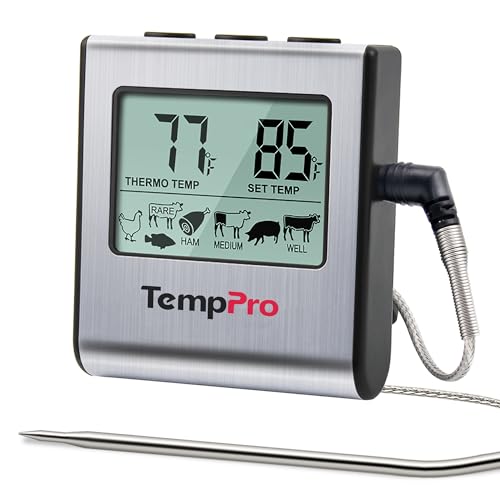
A reliable probe thermometer makes the doneness check far easier than guessing by feel alone. Owners often report that a leave-in probe with an alarm reduces the number of lid lifts needed, which protects the cook.
- Leave-in meat probe thermometer: Lets you monitor internal temperature without opening the cooker. View on Amazon
- Fat separator measuring cup: Makes skimming the cooking liquid quick and clean. View on Amazon
- Slicing knife with a long blade: Helps you cut clean, even slices across the grain. View on Amazon
FAQ
Can I cook brisket on high in a slow cooker?
Yes, you can cook it on high for about 5 to 6 hours. The texture is usually a bit firmer than low-cooked brisket, so check for doneness early.
Do I need to add liquid to the slow cooker?
Some liquid is needed to keep the environment moist and prevent scorching, but the brisket should not be submerged. About 1 to 1 1/2 cups total is typical for a 4 pound flat.
Should the fat side be up or down?
Fat side up is the common recommendation, because the rendering fat drips down and bastes the meat during the long cook.
Why is my brisket tough after 8 hours?
It probably needs more time. Brisket becomes tender only after collagen fully converts, which can take longer than 8 hours in some cookers. Check the internal temperature and continue cooking if it is below about 195°F.
Can I use a frozen brisket?
No. Thaw it completely in the refrigerator first. Cooking from frozen leaves the center in the danger zone for too long and gives uneven results.
How do I store leftover brisket and onions?
Refrigerate the sliced meat in its gravy in an airtight container for up to 3 to 4 days. Reheat gently on the stovetop or in the microwave with a splash of broth.
Is slow cooker brisket food safe at low temperatures?
Keep the slow cooker on low or high and confirm the meat reaches at least 145°F internally, then continue to tenderness. For specific food safety questions, consult the USDA food safety guidelines or a local extension office.
Conclusion
Slow cooker beef brisket and onions rewards patience with meat that is tender, flavorful, and easy to serve. Trim the fat, season well, build an onion base, and cook on low for 8 to 10 hours until the internal temperature reaches the tender range. Rest the meat, skim and reduce the gravy, and slice across the grain for the best texture.