As an Amazon Associate we earn from qualifying purchases. This page may contain affiliate links.
Cooking brisket in oven is a practical way to get tender, sliceable beef without a smoker or a backyard full of hardwood. Set the oven to a low, steady temperature, season the meat, wrap it once the bark sets, and cook until a probe slides in with almost no resistance. Then rest it long enough for the juices to settle. Done right, the result is close to what you would get from a pellet grill or offset smoker, with a little less smoke flavor and a lot less babysitting.
What You Need Before You Start
Brisket is a tough cut from the chest of the cow, full of connective tissue. Low, slow heat is what turns that tissue into gelatin, so the oven method is really about patience and temperature control. Gather your equipment first so you are not hunting for a pan while the oven is preheating.
Equipment checklist
- A whole packer brisket (12 to 16 pounds) or a flat (4 to 7 pounds). Whole packers include the point and flat and are more forgiving in the oven.
- A roasting pan with a rack, deep enough to hold a splash of liquid without touching the meat.
- Heavy-duty aluminum foil or pink butcher paper for wrapping.
- An instant-read thermometer and, ideally, a leave-in probe thermometer.
- A sharp slicing knife and a cutting board with a groove to catch juices.
- A cooler, or a dry towel-lined oven with the light on, for resting.
Ingredients for a basic rub
- 1/4 cup coarse kosher salt
- 1/4 cup coarsely ground black pepper
- 1 tablespoon garlic powder (optional)
- 1 tablespoon smoked paprika (optional, for color)
- 1 cup beef broth or water, for the pan
Salt and pepper alone work well. Brisket does not need a complicated rub to taste good, and the oven does not add smoke, so any extra spice should be used in moderation.
Step-by-Step: How to Cook Brisket in the Oven
Step 1: Trim the fat cap
Set the brisket fat side up on a cutting board. Trim the hard fat to a layer about 1/4 inch thick, removing any large chunks or silver skin. A thin fat cap bastes the meat as it renders. Too much fat will keep the rub from penetrating and can make the finished slices greasy.
Step 2: Season and rest
Pat the brisket dry, then coat every surface with the salt and pepper mix. For best results, season the night before and refrigerate uncovered on a rack. This dry-brine step lets the salt move into the muscle and helps form a better surface. If you are short on time, season at least one hour ahead and let the meat come close to room temperature for about 30 minutes before it goes in the oven.
Step 3: Preheat and set up the pan
Preheat the oven to 250°F. Some cooks prefer 225°F for a longer, gentler cook, and others use 275°F to shorten the timeline. Anything from 225°F to 275°F works. Place the rack in the roasting pan, set the brisket on the rack fat side up, and pour the broth into the bottom of the pan. The liquid adds humidity and keeps drippings from scorching.
Step 4: Cook uncovered until the surface sets
Roast uncovered for the first 2 to 3 hours. The surface will darken and firm up, which is the start of what pitmasters call bark. Keep an eye on the pan and add hot broth if it looks dry. Do not open the oven constantly. Each time the door opens, the temperature drops and the cooking time gets longer.
Step 5: Wrap the brisket
Once the surface is deep brown and the internal temperature reaches about 160°F to 165°F, wrap the brisket tightly in double-layer heavy-duty foil or pink butcher paper. Foil gives a softer bark and speeds cooking. Butcher paper lets moisture escape and keeps the crust firmer. Either works. Put the wrapped meat back on the rack, fat side up, and return it to the oven.
Step 6: Cook to probe tender
Continue cooking until the internal temperature reaches roughly 200°F to 203°F in the thickest part of the flat. Temperature is a guide, but the real test is feel. Insert a probe or thermometer into the thick end of the flat. It should slide in with little resistance, similar to pushing into a jar of peanut butter. If it still feels tight, keep cooking and check every 30 minutes.
As a rough planning number, brisket often takes about 1 to 1.5 hours per pound at 250°F, but size, shape, and how much fat the meat carries all change the timing. Plan for more time than you think you need, and use temperature and feel instead of the clock.
Step 7: Rest the brisket
Remove the brisket from the oven and let it rest, still wrapped, for at least 1 hour. For best results, wrap it in towels and place it in a dry cooler for 2 to 4 hours. A long rest is one of the biggest differences between good brisket and great brisket. It allows the muscle fibers to relax and the juices to redistribute. The brisket will stay hot for hours in a cooler, so you can finish other dishes without rushing.
Step 8: Slice against the grain
Unwrap the brisket and separate the point from the flat if you are working with a whole packer. Look for the direction of the muscle fibers on the flat and cut across them. Slice the flat about 1/4 inch thick. Cut the point into thicker chunks or slices, since the fat and fibers run in a different direction. Save the drippings from the pan and spoon them over the slices before serving.
Oven Brisket Cooking Times and Temperatures
The table below summarizes the main stages. These are general targets for a whole packer or large flat, and they should be adjusted based on your meat and oven.
| Stage | Oven temperature | Internal target | What to look for |
|---|---|---|---|
| Initial roast (uncovered) | 250°F | Up to 160°F to 165°F | Dark, firm bark forming |
| Wrapped cook | 250°F | 200°F to 203°F | Probe slides in with little resistance |
| Rest | Off (cooler or towel-wrapped) | Stays above 140°F | Juices settle, meat relaxes |
| Slice | N/A | Serve warm | Clean slices across the grain |
Common Mistakes When Cooking Brisket in the Oven
Most failed oven briskets come down to a few avoidable errors. Watch for these.
- Cooking too hot. Temperatures above 300°F tighten the muscle fibers and dry out the meat before the collagen breaks down.
- Pulling by time alone. A brisket that reaches the target temperature but still feels tight needs more time. Trust the probe.
- Skipping the rest. Slicing right out of the oven lets juices run onto the board and leaves the slices dry.
- Letting the pan dry out. Check the liquid level occasionally, especially in the first few hours.
- Wrapping too early or too loosely. Wrap after the bark has set, and seal the foil or paper well so steam stays in.
- Slicing with the grain. Cutting parallel to the fibers makes even well-cooked brisket feel chewy.
Tips for Better Results
- Buy a whole packer if you can. The point stays moister and the flat cooks more evenly when it is attached.
- Use a leave-in probe to avoid opening the oven repeatedly.
- Keep the brisket fat side up for the entire cook so the fat renders down through the meat.
- If you want a bit more smoke character, add a few drops of liquid smoke to the broth. Use sparingly, as it is strong.
- For a deeper crust, unwrap for the final 20 to 30 minutes at a slightly higher temperature. Watch closely so the surface does not burn.
- If you are cooking for a crowd, the brisket can be sliced, placed in a pan with some of the drippings, covered, and reheated at 300°F until warm.
If you are curious how brisket compares to other beef cuts for slow cooking, How to BBQ Different Beef Cuts: From Brisket to Ribeye covers the differences in fat content, fiber structure, and the best cooking methods for each. If you are new to temperature control in general, How to Set Up a Two-Zone Grill for Versatile Cooking explains how to manage heat zones, which is useful background even when the main cook happens indoors.
Food Safety Notes
Keep raw brisket refrigerated at 40°F or below until you are ready to season it. Do not leave cooked meat at room temperature for more than two hours. If you are resting the brisket in a cooler, that is a reasonable holding method, but do not let it sit out on the counter for hours. Cool leftovers quickly by slicing and refrigerating them in shallow containers within two hours of cooking. Reheat to 165°F before serving. If you have specific health concerns or questions about food handling for a large group, check with a food safety professional or your local extension office.
Recommended gear
Most of what you need is standard kitchen equipment, but three items make oven brisket noticeably easier to get right.
- Instant-read digital thermometer: A fast, accurate reading lets you check the flat and point quickly without leaving the oven door open for long. Check price on Amazon
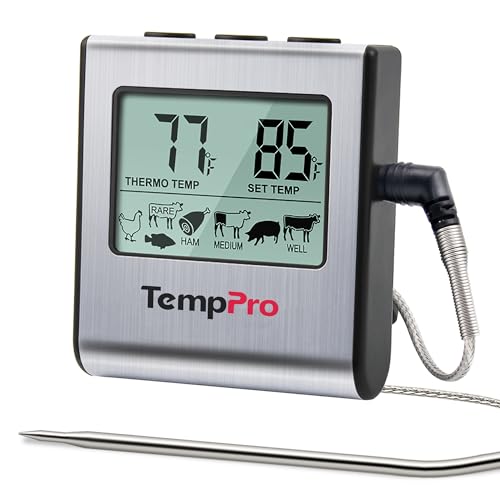
- Leave-in probe thermometer: A wired or wireless probe stays in the meat for the whole cook, so you can track progress and avoid guessing when the brisket is ready. Check price on Amazon
- Heavy-duty aluminum foil or pink butcher paper: Foil traps moisture and speeds cooking, while butcher paper helps keep the bark firmer. Having both lets you choose based on how you want the finished crust to look. Check price on Amazon
A heavy roasting pan with a rack is also worth having if you do not already own one. A sturdy pan with a rack keeps the brisket above the drippings and holds steady during long cooks. For more general gear ideas, Essential Charcoal Grill Accessories for Better Cooking and Safety covers thermometers and other tools that carry over to outdoor cooking.
FAQ
What temperature should I cook brisket in the oven?
Most cooks use 225°F to 275°F. A setting around 250°F balances time and tenderness well. Going much hotter tends to dry out the meat before the connective tissue breaks down.
How long does brisket take in the oven?
A common planning figure is about 1 to 1.5 hours per pound at 250°F, but the real finish point is an internal temperature of roughly 200°F to 203°F with a probe that slides in easily. Build in extra time for the rest.
Should I cook brisket covered or uncovered in the oven?
Start uncovered to form a bark, then wrap in foil or butcher paper once the surface is dark and the meat reaches about 160°F to 165°F. Wrapping speeds the cook and keeps the meat moist through the stall.
Why is my oven brisket tough?
Toughness usually means the brisket came off the heat too early, was cooked too hot, or was sliced with the grain. Cook it until the probe feels tender, rest it well, and slice across the muscle fibers.
Can I cook a brisket flat in the oven instead of a whole packer?
Yes. A flat cooks faster and is easier to fit in a standard oven, but it has less fat and can dry out more easily. Check it early, and consider wrapping sooner to keep the moisture in.