As an Amazon Associate we earn from qualifying purchases. This page may contain affiliate links.
If you want slow cooker brisket fall-apart tender enough to pull apart with a fork, you need a cooker that holds a steady low temperature for 8 to 10 hours and has room for the cut. This list is for home cooks who want a braise-style brisket without tending a smoker all day. The key buying factor is capacity: a brisket flat has to fit the insert with the lid closed, and the cooker must stay in a safe, steady range the whole time.
Quick picks
| Pick | Best for | Key feature |
|---|---|---|
| Programmable oval stoneware slow cooker (Crock-Pot Smart-style) | Most home cooks cooking a 4 to 5 lb brisket flat | Oval insert and adjustable Low and High settings with a timer |
| Set-and-forget digital slow cooker (Hamilton Beach-style) | Weeknight schedules and hands-off cooking | Auto warm mode after the timer ends |
| Multi-cooker with slow cook mode (Instant Pot Duo-style) | Cooks who want pressure cooking and slow cooking in one pot | Slow cook function plus pressure cooking to shorten prep |
| Multi-cooker with sear and slow cook (Ninja Foodi-style) | Browning the brisket in the same pot before it cooks low | Stovetop-style searing in the pot |
| Large-capacity 7 to 8 quart oval cooker | Cooking for a crowd or a larger brisket cut | Extra-deep insert that fits a full flat with room for liquid |
How we chose
This list is based on research into product specifications, brand reputation, and patterns in owner feedback. We did not test these cookers ourselves, and we do not claim lab results or first-hand use. Instead, we looked at what manufacturers publish and what owners tend to say after cooking large cuts of beef.
We focused on five criteria:
- Capacity: Manufacturers list capacity in quarts. For brisket, we looked for inserts that take a 4 to 6 lb flat with the lid closed and a cup or two of liquid.
- Temperature control: Low setting temperatures and whether the unit offers a programmable timer or auto-warm.
- Insert design: Oval shapes fit brisket better than round ones. Removable, dishwasher-safe inserts are a plus for cleanup.
- Brand reputation: Long track records, parts availability, and warranty terms that manufacturers publish.
- Owner feedback patterns: Common praise and common complaints about heat consistency, lid fit, and lid condensation.
Crock-Pot Smart-style programmable oval slow cooker
Who it’s for: Home cooks who want a dependable, familiar oval cooker for a standard brisket flat and plan to serve four to six people.
- The oval insert fits a typical brisket flat better than a round pot, so the meat sits in a shallow layer of liquid rather than being stacked.
- Programmable timers let you set a cook time and switch to warm afterward, which helps when a long cook runs past dinner.
- The brand is widely available, and replacement inserts and lids are generally easy to find.
Cons:
- Owners often report that the lid can drip condensation onto the meat, which can wash off the rub if you don’t pat the brisket dry first.
- Low settings can run hotter than expected on some units, so checking internal temperature with a probe thermometer is a good habit.
Hamilton Beach-style set-and-forget digital slow cooker
Who it’s for: Busy cooks who start brisket in the morning and want the cooker to handle the rest without checking in.
- Digital controls with a set time and auto-warm mode suit long, unattended cooks.
- Many models use a removable stoneware insert that’s dishwasher safe, which simplifies cleanup after a messy braise.
- Typically lighter and easier to store than larger multi-function units.
Cons:
- Capacity varies by model, and some oval options are narrower than a full brisket flat, so measure the insert before you buy.
- Limited functions compared with multi-cookers, so you can’t sear or pressure cook in the same unit.
Instant Pot Duo-style multi-cooker with slow cook mode
Who it’s for: Cooks who want one appliance for pressure cooking, soups, rice, and slow braises, and who are willing to learn a few settings.
- The slow cook function gives you a set low or high temperature and a timer, and pressure cooking can cut a brisket’s braise time to a few hours if you need dinner sooner.
- Cooking a brisket in a pressure-capable pot gives you a second option when the schedule changes.
- Replacement stainless steel inserts are widely sold, and the pot is compact for its feature set.
Cons:
- Brisket cooked under pressure can turn mushy if the timing is off, so it’s better suited to braises that are cut into large chunks or to cooks who know the settings well.
- The inner pot is usually shallower and narrower than a dedicated oval slow cooker, which can make a full flat fit tightly.
Ninja Foodi-style multi-cooker with sear and slow cook
Who it’s for: Cooks who want to brown the brisket, add liquid, and then slow cook in one pot without dirtying a skillet.
- Searing in the same pot builds a crust and fond, which adds depth to the braising liquid.
- Multiple cooking modes, including pressure and air crisping on some models, give you options for finishing the meat.
- Owners often say the pot handles large cuts well when the lid and insert are placed correctly.
Cons:
- Multi-function units have more parts and more settings, which means a steeper learning curve and more to clean.
- Some models are taller than slow cookers, so check cabinet clearance before you buy.
Large-capacity 7 to 8 quart oval slow cooker
Who it’s for: Cooks feeding a crowd, or anyone who wants to cook a larger flat or two smaller cuts at once.
- Extra depth gives you room for a full flat plus liquid without the meat touching the lid.
- The larger insert is useful for chili, pulled pork, and other batch cooking, so it earns its counter space.
- Oval shapes in this size class are common, which makes them easier to find than specialty models.
Cons:
- Heavy when full, so lifting a loaded insert out of the base requires two hands and care.
- Larger units heat more slowly, so the cook may take a bit longer to reach a steady braise temperature at the start.
Buying guide: what matters for slow cooker brisket fall-apart tender results
Choosing a cooker is only part of the job. The factors below explain how a slow cooker affects the final texture of a brisket, and what to check before you start.
1. Insert size and shape
A brisket flat usually runs 4 to 6 lb after trimming. Look for an insert that holds the meat with at least an inch of clearance under the lid and room for about 1 to 2 cups of liquid. Oval inserts usually fit a flat better than round ones. A full packer brisket, which can weigh 12 to 16 lb, won’t fit in most slow cookers, so cut it into smaller sections or cook the flat only.
2. Low-heat accuracy
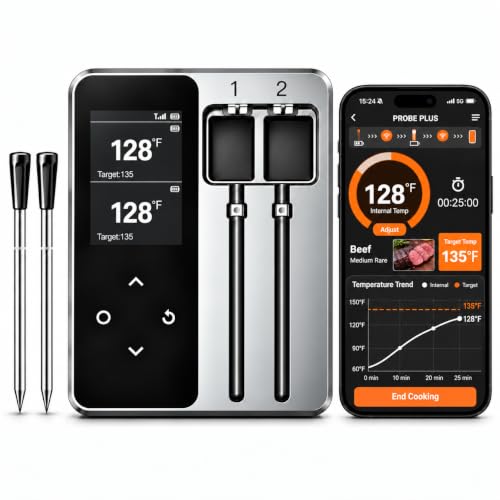
Brisket becomes fall-apart tender when connective tissue breaks down, which generally happens as the internal temperature climbs into the 195 to 205°F range and holds there for a while. Slow cookers usually run hottest on the Low setting in the 190 to 200°F range, and actual temperatures vary by model. A probe thermometer clipped to the lid or inserted into the meat tells you more than the dial does. Check the temperature early and again midway through.
3. Timer and warm mode
Brisket often needs 8 to 10 hours on Low for a flat, and cooks sometimes run longer. A programmable timer and auto-warm mode prevent overcooking if you’re away. Without them, you’ll need to check the meat around the 7-hour mark and decide whether it needs more time.
4. Liquid level and lid fit
Slow cookers hold moisture well, so you don’t need to submerge the brisket. A cup or two of beef stock, onion, and a little liquid smoke is typical for a flat. Too much liquid dilutes the rub and can make the bark soggy. A lid that fits snugly keeps heat in, but owners often report condensation dripping back onto the meat. Patting the brisket dry before cooking and placing it fat-side up helps.
5. Searing and finishing options
Slow cookers don’t brown meat. Searing the flat in a skillet or in a multi-cooker’s sear mode before braising adds color and flavor. Some cooks finish the brisket on a grill or under a broiler to tighten the surface. If you want a smoke-kissed flavor, you can smoke the brisket first and finish it in the slow cooker, though this is a hybrid method rather than a pure slow cooker recipe.
6. Cleanup and parts
Removable, dishwasher-safe inserts save time after a greasy braise. Check that replacement inserts and lids are sold for the model. Stoneware is heavy but holds heat evenly, while stainless steel inserts in multi-cookers are lighter and handle searing better.
FAQ
How long does brisket take in a slow cooker?
A 4 to 5 lb brisket flat usually takes 8 to 10 hours on Low. Use internal temperature rather than time alone. Most cooks aim for roughly 195 to 205°F, where the meat probes like soft butter. If you use a pressure-capable multi-cooker, the braise can be much shorter, but texture changes, so follow the manufacturer’s time chart for your cut.
Can I cook a full packer brisket in a slow cooker?
Usually not. Full packers are often 12 to 16 lb, and most slow cookers can’t hold them with the lid closed. Cut the packer into the flat and point, or cook the flat alone. If you do have a large oval cooker, check that the lid fits before you add liquid.
Do I need to add liquid to a slow cooker brisket?
Yes, a little. Slow cookers trap moisture, so you don’t need to cover the meat. About 1 to 2 cups of stock, broth, or diluted beer is typical for a flat. The liquid keeps the meat moist and creates a braising base for gravy or a sauce.
Will a slow cooker brisket have bark like a smoker brisket?
No. A slow cooker braises in moist heat, so the outside stays soft and doesn’t form the crust a smoker produces. If you want bark, sear the flat before cooking or finish it on a grill. For smoker technique, see Mastering Low and Slow Smoking for Perfect Barbecue and A Guide to Indirect Heat for Smoking and Slow Roasting.
Is it safe to leave a slow cooker on for 10 hours?
Slow cookers are designed for long, unattended cooks when used as the manufacturer directs. Keep the meat well above 140°F during cooking, and refrigerate leftovers within two hours of finishing. If you’re unsure about food safety for a specific appliance or a large batch, check the manufacturer’s guidance or ask a local food safety authority.
For more beef options, see How to BBQ Different Beef Cuts: From Brisket to Ribeye.