As an Amazon Associate we earn from qualifying purchases. This page may contain affiliate links.
Classic brisket with onions is a simple cook with a lot riding on equipment. The onions sweeten the drippings and add moisture, but the meat still needs steady low heat for 10 to 14 hours on a packer cut, and it needs an accurate way to tell when it’s done. This list is for backyard cooks who already know the basic method and want gear that holds temperature, reads the meat correctly, and can handle the onion-and-braise step. The key buying factor is consistent low-and-slow heat paired with reliable internal temperature readings.
Quick picks
| Pick | Best for | Key feature |
|---|---|---|
| Weber Smokey Mountain Cooker | Traditional charcoal smoke flavor | Water pan and vertical design for stable, long cooks |
| Traeger Pro 575 Pellet Grill | Set-and-forget hands-off cooks | Digital controller with a wide temperature range |
| Lodge Cast Iron Dutch Oven | Braising brisket with onions in the oven | Heavy cast iron with a tight-fitting lid |
| ThermoWorks Thermapen ONE | Checking the flat and point for doneness | Fast, precise instant-read probe |
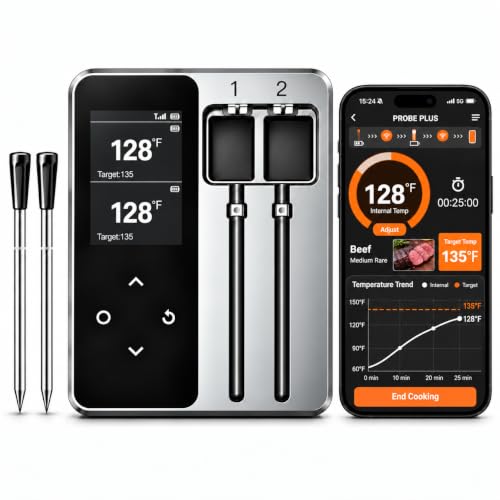
| MEATER Plus Wireless Thermometer | Monitoring the cook from indoors | Wireless probe with a Bluetooth app |
How we chose
We compared manufacturer specifications first: cooking area, temperature range, probe accuracy, cast iron weight, and wireless range. Where a spec mattered for brisket specifically, such as whether a cooking chamber fits a full packer trimmed to about 12 to 14 pounds, we weighted it more heavily. We also considered brand reputation over many years in the barbecue community and patterns in owner feedback, including what buyers repeatedly praise and what they repeatedly report as a problem. We did not test these products ourselves. Specifications can change between model years, so confirm the details on the manufacturer’s current listing before you buy.
Every pick here fits one of three roles in a classic brisket with onions cook: the heat source, the braising vessel, or the temperature monitoring. We chose a mix so you can see how each role affects the final result, and you can mix and match depending on your setup.
The five picks in detail
Weber Smokey Mountain Cooker
Who it’s for: Cooks who want a charcoal smoker that holds temperature well for long overnight brisket sessions and who don’t mind managing fuel and vents by hand.
Pros:
- Vertical design uses heat and smoke efficiently, which suits the long, low cook a packer brisket needs.
- The water pan helps buffer temperature swings and keeps the meat from drying out during the stall.
- Owners often report that the 22-inch model has enough grate space for a full packer plus a foil pan of sliced onions.
Cons:
- Expect to tend the fire and manage the vents, especially in windy weather, and to add charcoal during a long cook.
- The lid and water pan need regular cleaning, and ash removal takes a few minutes after each cook.
Traeger Pro 575 Pellet Grill
Who it’s for: Backyard cooks who want steady smoke with little hands-on work and who are comfortable with a grill that needs electricity to run its controller and auger.
Pros:
- The digital controller holds a set temperature closely, which makes it easier to keep a brisket in the low-225 to 250°F range for hours.
- Manufacturers specify a cooking area of about 575 square inches, which fits a full packer and a sheet pan of onions on separate racks.
- Owners frequently mention the consistent smoke flavor from hardwood pellets, especially for first-time brisket cooks.
Cons:
- Pellet grills rely on electricity, so a power cut or a dead outlet will stop the cook unless you have a backup plan.
- Pellet smoke is generally milder than wood or charcoal smoke, and some pitmasters feel the bark forms less deeply.
Lodge Cast Iron Dutch Oven
Who it’s for: Cooks who want to finish a classic brisket with onions by braising in the oven, either as a full cook or after the brisket has taken on smoke.
Pros:
- Cast iron holds heat evenly, so the onions and drippings simmer gently without scorching on the bottom.
- The heavy lid traps steam, which keeps the meat moist during the braise.
- Lodge is a long-established cookware brand, and owners commonly report that the enamel-free pre-seasoned surface works well with onions and acidic liquids once it’s seasoned.
Cons:
- Cast iron is heavy, and a full packer brisket plus liquid can make the pot difficult to lift in and out of an oven.
- Make sure you choose a size that fits the brisket. A 5-quart pot is often too small for a full packer, so check the capacity against the cut you’re buying.
ThermoWorks Thermapen ONE
Who it’s for: Anyone who wants a fast, precise handheld thermometer for checking the flat and point of the brisket and confirming doneness near the end of the cook.
Pros:
- The manufacturer specifies fast readings and tight accuracy, which matters when you’re judging tenderness in the 195 to 205°F range.
- The probe is thin, so the hole it leaves is small, and the meat keeps its juices.
- Owners often describe it as a tool they use on every cook, from steaks to poultry, which makes the cost easier to justify.
Cons:
- It’s a spot-check tool, not a continuous monitor, so you still need to open the cooker to read it.
- It’s one of the more expensive instant-read options, and some buyers choose a less costly model for occasional use.
MEATER Plus Wireless Thermometer
Who it’s for: Cooks who want to watch the brisket’s internal temperature from indoors and get alerts when the meat reaches the target.
Pros:
- The wireless probe stays in the meat for the whole cook and sends readings to a companion app on a phone.
- The app can alert you when the brisket reaches a set temperature, which helps during overnight cooks.
- Owners frequently mention that it reduces the number of times they open the smoker, which helps keep the cooker temperature steady.
Cons:
- Wireless probes depend on Bluetooth and battery life, and some owners report dropped connections or signal issues through thick walls and at long distances.
- The probe is a single-point reading, so brisket with a thick flat and point can still need a spot-check in a second location.
If you’re still planning your overall approach, How to BBQ Different Beef Cuts: From Brisket to Ribeye covers how brisket compares with other beef cuts and why the cut’s connective tissue changes the cooking timeline.
Buying guide: what matters for classic brisket with onions
Choosing gear for this cook is less about brand loyalty and more about matching the equipment to the way you cook. These factors make the biggest difference.
1. Heat stability over long cooks
A packer brisket usually spends 10 to 14 hours in the cooker, and the temperature needs to stay steady, around 225 to 250°F, for most of that time. Look for cookers with good insulation, tight-sealing lids, and controllers or vent designs that make small adjustments easy. Charcoal smokers need more hands-on attention. Pellet grills and electric smokers hold temperature more automatically but depend on a power source.
2. Cooking area and fit
Measure the brisket before you buy the cooker. A full packer, often 12 to 14 pounds untrimmed, is wide and long, and it needs room for airflow around it. Also plan for a pan of sliced onions if you want to cook them alongside the meat. Manufacturers list cooking area in square inches, and that number is a useful starting point for comparing models.
3. Smoke flavor profile
Classic brisket is known for a deep smoke ring and bark, and the fuel shapes both. Wood and charcoal smokers generally produce a stronger, more traditional smoke. Pellet grills produce a milder, more even smoke. Neither is wrong, but if you want the deepest bark, a wood or charcoal setup usually gives you more control over smoke density.
4. Accurate temperature monitoring
Brisket is done by feel and temperature rather than by time alone. You need a probe that reads accurately in the flat and in the point, plus a fast instant-read thermometer for spot-checks. Reading the meat in more than one place helps, because the flat and point cook at different rates. Keep your thermometer calibrated, and use ice water to check a reading if you’re unsure.
5. Braising vessel and onion handling
Onions are central to classic brisket with onions, so the vessel matters. Cast iron Dutch ovens are a strong choice for braising because they hold heat evenly and seal well. Make sure the pot is large enough for the brisket and the liquid, and check that its lid fits snugly. A heavy-gauge foil pan works for a simpler, disposable approach, though it holds less heat.
6. Cleanup, maintenance, and build quality
Long cooks produce grease, ash, and drippings. Consider how easy the grease tray, water pan, or ash pan is to empty and clean. Cast iron needs seasoning and dry storage. Stainless steel and porcelain-coated parts resist rust better but can still stain. Choose gear you will actually clean after each use, because a neglected cooker or pot affects flavor and performance over time.
FAQ on classic brisket with onions gear
Do I need a Dutch oven to make classic brisket with onions?
No. You can cook the onions in a foil pan on the cooker, or braise the brisket in a roasting pan wrapped with foil. A Dutch oven helps most when you want to braise the meat in the oven with onions and liquid, because the lid traps steam and holds heat evenly. If you choose a Dutch oven, check that the capacity fits the cut you’re buying.
What internal temperature should brisket reach?
Many pitmasters pull brisket somewhere between 195 and 205°F, but the best guide is tenderness. A probe should slide into the thickest part of the flat with little resistance. Always cook pork and beef to the safe minimum temperatures recommended by food safety agencies, and check the current USDA guidance for food safety details. If you have specific health concerns, such as a compromised immune system, consult a food safety professional or your healthcare provider.
Is a pellet grill good enough for brisket?
Yes, many cooks produce good brisket on pellet grills. The steady controller helps with long cooks, and the smoke is milder but still flavorful. The main trade-off is that you lose some of the deep, traditional smoke flavor that wood or charcoal provides, and you need reliable power for the entire cook.
Should I wrap brisket in foil or butcher paper?
Both are common. Foil traps more moisture and speeds the cook through the stall, but it can soften the bark. Butcher paper lets some steam escape and keeps more bark texture. Onions can be placed under or alongside the brisket in either method. Choose based on the bark you want and how much moisture you want to keep in the meat.