By Miles Sinclair
Updated November 2026
If you are wondering how long to cook a brisket in the oven, the honest answer is that it depends on the weight of the cut, the oven temperature you choose and how far you push it toward tenderness. Most oven briskets land somewhere between 1 and 1.5 hours per pound at 275°F to 325°F, but the real signal is internal temperature, not the clock. The books below were selected for how well they explain timing, wrapping, resting and doneness, since a good reference can save a lot of trial and error. We based the selection on the depth of brisket-specific coverage, the reputation of the authors and publishers, and the patterns owners tend to mention in feedback, such as clear step-by-step timing, usable temperature charts and recipes that work in a standard home oven. This is a research-based comparison, not a hands-on test.
Our top picks at a glance
- 1
 TOP CHOICEBest overallThe Brisket Chronicles: How to Barbecue, Braise, Smoke, and Cure the WView on Amazon
- 2
 TOP CHOICEBest for beginnersBomb Brisket: A Beginner's Guide to BBQ's Most Legendary CutView on Amazon
- 3
 TOP CHOICEBest for broad cooking methodsProject Smoke: Seven Steps to Smoked Food Nirvana, Plus 100 Irresistible RecipesView on Amazon
- 4
 Best for step-by-step timingLone Star Brisket: A Step by Step Guide on How to Smoke BrisketView on Amazon
- 5
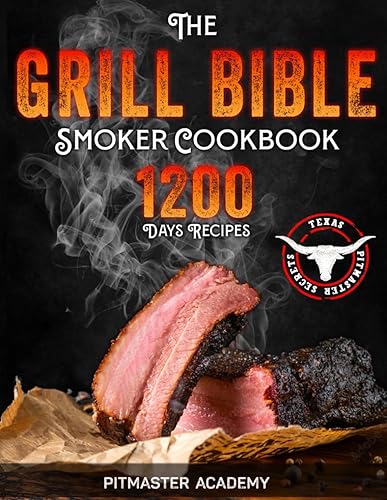 Best for recipe varietyThe Grill Bible Smoker Cookbook: 1200 Days of Tender & Juicy Bbq RecipesView on Amazon
- 6
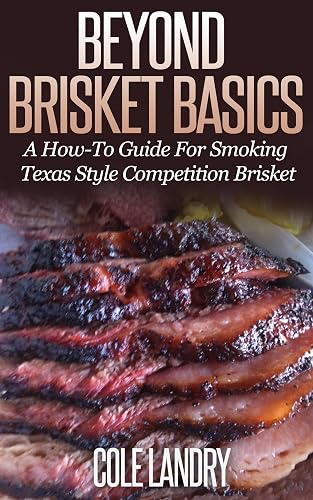 Best for competition-style resultsBeyond Brisket Basics: A How-To Guide On Smoking Texas Style Competition BrisketView on Amazon
Our Top Picks
Quick Comparison
| Product | Best for | Key feature |
|---|---|---|
| The Brisket Chronicles | Overall brisket reference | Covers barbecue, braise, smoke and cure methods |
| Bomb Brisket | Beginners | Focused introduction to brisket fundamentals |
| Project Smoke | Broad smoking methods | Seven-step framework plus 100 recipes |
| Lone Star Brisket | Step-by-step timing | Sequential, process-driven instructions |
| The Grill Bible Smoker Cookbook | Recipe variety | Large collection of tender, juicy barbecue recipes |
| Beyond Brisket Basics | Competition-style results | Texas-style competition brisket focus |
The Brisket Chronicles: How to Barbecue, Braise, Smoke, and Cure the World’s Most Epic Cut of Meat
The Brisket Chronicles: How to Barbecue, Braise, Smoke, and Cure the World's Most Epic Cut of Meat (Steven Raichlen Barbecue Bible Cookbooks)
Best for: Overall brisket reference
This is a good fit for cooks who want one book that explains brisket across several methods, including oven roasting and braising, so they can compare timing and temperature approaches side by side.
Key specs
- Format: cookbook covering barbecue, braising, smoking and curing brisket
- Part of the Steven Raichlen Barbecue Bible series
Pros
- Covers multiple cooking methods in one place
- Useful background on the cut itself
- Series reputation for detailed instruction
Cons
- Broader scope means less depth on any single oven method
- Some readers may want more beginner-level hand-holding
Bottom line: A strong first pick if you want a single reference that treats brisket as a whole subject rather than one technique.
Bomb Brisket: A Beginner’s Guide to BBQ’s Most Legendary Cut
Bomb Brisket: A Beginner’s Guide to BBQ’s Most Legendary Cut
Best for: Beginners
Written for newer cooks who feel intimidated by a large, fatty cut, this book focuses on building confidence with the basics of timing, seasoning and temperature control.
Key specs
- Format: beginner-focused guide to brisket
Pros
- Approachable tone for first-time brisket cooks
- Concentrated on one cut rather than many
- Good for building a foundation before trying advanced methods
Cons
- Narrower coverage than multi-method cookbooks
- Fewer advanced techniques for experienced cooks
Bottom line: The right choice if you are new to brisket and want clear guidance before branching out.
Project Smoke: Seven Steps to Smoked Food Nirvana, Plus 100 Irresistible Recipes
Project Smoke: Seven Steps to Smoked Food Nirvana, Plus 100 Irresistible Recipes from Classic (Slam-Dunk Brisket) to Adventurous (Smoked Bacon-Bourbon … (Steven Raichlen Barbecue Bible Cookbooks)
Best for: Broad smoking methods
This suits cooks who want a structured system for smoking many foods, with brisket as one of several proteins, and who appreciate a repeatable framework.
Key specs
- Format: cookbook with a seven-step smoking framework
- Includes around 100 recipes
Pros
- Clear step-based system adaptable to many foods
- Large recipe collection
- Strong reputation within the Barbecue Bible series
Cons
- Brisket is not the sole focus, so depth is spread thin
- Oven-specific instructions are limited, since the book centers on smoking
Bottom line: Best for cooks who want a smoking system they can apply broadly, with brisket as one application among many.
Lone Star Brisket: A Step by Step Guide on How to Smoke Brisket
Lone Star Brisket: A Step by Step Guide on How to Smoke Brisket
Best for: Step-by-step timing
Ideal for readers who prefer a linear, process-driven guide that walks through each stage of the cook in order, from trimming to resting.
Key specs
- Format: step-by-step brisket guide
Pros
- Sequential structure makes timing easy to follow
- Focused entirely on brisket
- Practical for planning a full cook day
Cons
- Written around smoking, so oven adaptation requires some translation
- Limited variety beyond the core method
Bottom line: A good pick for cooks who want a clear timeline and plan to adapt the steps to an oven.
The Grill Bible Smoker Cookbook: 1200 Days of Tender & Juicy Bbq Recipes
The Grill Bible • Smoker Cookbook: 1200 Days of Tender & Juicy Bbq Recipes to Surprise Your Guests | Discover the Ultimate Texas Brisket Secrets and Become an Award-Winning Pitmaster
Best for: Recipe variety
This works well for cooks who want a large library of smoker and barbecue recipes and plan to branch out from brisket over time.
Key specs
- Format: smoker-focused cookbook with a large recipe collection
Pros
- Wide range of recipes beyond brisket
- Accessible layout for everyday cooking
- Covers the Texas brisket approach among other styles
Cons
- Brisket instructions may be less detailed than dedicated brisket guides
- Oven timing is not the primary focus
Bottom line: Pick this if you want variety and are comfortable adapting smoker timing to oven cooking.
Beyond Brisket Basics: A How-To Guide On Smoking Texas Style Competition Brisket
Beyond Brisket Basics: A How-To Guide On Smoking Texas Style Competition Brisket
Best for: Competition-style results
Aimed at cooks who already know the basics and want to refine toward the bark, trim and tenderness standards associated with Texas-style competition brisket.
Key specs
- Format: how-to guide focused on Texas-style competition brisket
Pros
- Deep focus on Texas-style technique
- Useful for refining bark and tenderness
- Suits intermediate and advanced cooks
Cons
- Not ideal for absolute beginners
- Competition methods may need scaling down for a home oven
Bottom line: The best choice for cooks ready to move past basic timing and aim for a more refined brisket.
Buying Guide
Coverage of oven methods
Check whether the book addresses oven cooking specifically or only smoker and grill methods. Oven timing differs because there is no smoke ring from wood and temperature control is usually more even. Look for explicit oven temperatures, usually in the 275°F to 325°F range, and notes on when to wrap.
Good picks for this: The Brisket Chronicles, Lone Star Brisket
Timing guidance and charts
Good references give time ranges per pound along with internal temperature targets. Brisket often reaches the 195°F to 205°F range before it is tender, and timing can stretch because of the stall. A book that explains the stall and how to plan around it will save you from surprises.
Good picks for this: Lone Star Brisket, Project Smoke
Beginner friendliness
If you have not cooked brisket before, pick a book with plain language, clear photos or diagrams, and a single focus. Dense, multi-method books can overwhelm a first-time cook trying to understand trimming, seasoning and resting at once.
Good picks for this: Bomb Brisket, Lone Star Brisket
Depth of technique
Experienced cooks often want details on bark formation, wrapping decisions, fat rendering and resting times that run an hour or more. Look for books that discuss why each step matters, not just what to do.
Good picks for this: Beyond Brisket Basics, The Brisket Chronicles
Recipe range
If you cook for a range of occasions, a book with many recipes lets you practice different proteins and sides. Confirm that brisket instructions are substantial enough for your goals rather than a short section in a larger collection.
Good picks for this: The Grill Bible Smoker Cookbook, Project Smoke
Author and series reputation
Books from established barbecue series and recognized authors tend to be more consistently edited and cross-checked. Owner feedback often highlights clarity of instructions and whether the advice holds up in practice, so read recent reviews for your specific use case.
Good picks for this: The Brisket Chronicles, Project Smoke
Format and layout
Consider whether you prefer a sequential, step-by-step layout or a reference organized by method. A linear timeline is easier to follow on cook day, while a method-based layout works better for comparing options.
Good picks for this: Lone Star Brisket, The Grill Bible Smoker Cookbook
FAQ
How long does it take to cook a brisket in the oven?
A common guideline is about 1 to 1.5 hours per pound at 275°F to 325°F, but the cut’s thickness, fat content and starting temperature all change the result. Plan for extra time because brisket can stall, and cook to doneness rather than to a fixed clock time.
What internal temperature should oven brisket reach?
Most cooks aim for roughly 195°F to 205°F internal temperature in the thickest part of the flat. Probe for tenderness, since a probe should slide in with little resistance when the brisket is ready.
Should I wrap brisket in foil while it cooks in the oven?
Many cooks wrap the brisket once the bark has set, often around 165°F to 170°F internal, to push through the stall and retain moisture. Butcher paper is another option that keeps some bark texture. Wrapping shortens the time to tenderness but can soften the crust.
How long should brisket rest after it comes out of the oven?
Resting for at least one hour, and often longer when wrapped and held in a cooler, lets juices redistribute and makes slicing easier. Slice against the grain and serve.
Can I cook a brisket in the oven at a higher temperature to save time?
You can, but higher heat increases the risk of drying the meat and tightening the connective tissue before it breaks down. Lower and slower usually gives more consistent tenderness, though it takes longer.
Is a brisket cookbook better than an online guide?
Cookbooks often give more structured context, including timing charts and method explanations, while online guides can be quicker to search. Both can be useful, and comparing a few sources helps you spot consistent advice.
For food safety guidance on cooking temperatures, consult a qualified food safety professional or your local extension office.
Conclusion
Most people asking how long to cook a brisket in the oven need a reliable timeline and a clear way to judge doneness. For a comprehensive reference, The Brisket Chronicles is a strong starting point. Beginners will likely prefer Bomb Brisket for its focused approach, while Lone Star Brisket suits cooks who want a linear, step-by-step timeline. Those who want broader recipe variety can look at The Grill Bible Smoker Cookbook or Project Smoke, and experienced cooks chasing competition-style results may find Beyond Brisket Basics most useful. Whichever you choose, trust internal temperature and tenderness over the clock.
For more on temperature targets, see Temperature to Cook Brisket: Target Numbers and Doneness Signs, and for oven-specific steps, try How to Cook Brisket in Oven: A Step-by-Step Guide for Tender Results. Cooks comparing smoker timing can read How Long to Smoke a Brisket? Times by Weight and Temperature and How Long to Smoke Beef Brisket: Times, Temps and Doneness Tips. If you are planning a full cook, How to Make Beef Brisket in the Oven: A Step-by-Step Guide for Tender Results and Temp for Finished Brisket: 203°F Target and How to Tell It's Done are useful next reads.
Sources
- Safe minimum internal cooking temperatures and food safety guidance for beef (fsis.usda.gov)
- Research-based university extension resources on safe meat preparation and cooking (extension.org)
- Federal food safety information on cooking and handling meat (foodsafety.gov)
Before you buy: helpful guides
About Miles Sinclair
Miles Sinclair is part of our editorial team and reviews and edits our BBQ & grilling guides, checking product details against manufacturer specifications and owner feedback.