 By Claire Whitaker
An easy oven brisket recipe gets you tender, sliceable beef with a peppery bark, using nothing more than your home oven, a roasting pan and a meat thermometer. Set the oven low, season generously, wrap the meat once it stalls, and rest it before slicing. Expect a total cook time of roughly 8 to 10 hours for a 4- to 6-pound flat, and plan on a rest of at least one hour.
Brisket has a reputation for being finicky, and that reputation is mostly earned by people trying to run a offset smoker on a windy afternoon. The oven removes most of the variables. Temperature stays steady, the kitchen is climate-controlled, and you can walk away between checks. The trade-off is that you won’t get the deep smoke ring a smoker produces, so the method here focuses on what the oven does well: slow, even heat and moisture control.
What You Need Before You Start
Gather your supplies the night before. Brisket is a long cook, and running to the store at hour four is the kind of problem this method is designed to avoid.
- A whole packer brisket or a trimmed flat, 4 to 6 pounds (a whole packer will need more time and a larger pan)
- Kosher salt and coarse black pepper, roughly equal parts by weight
- Optional: garlic powder, smoked paprika or onion powder for a slightly more complex rub
- A roasting pan or heavy Dutch oven large enough to hold the brisket flat with room around it
- Heavy-duty aluminum foil or butcher paper for wrapping
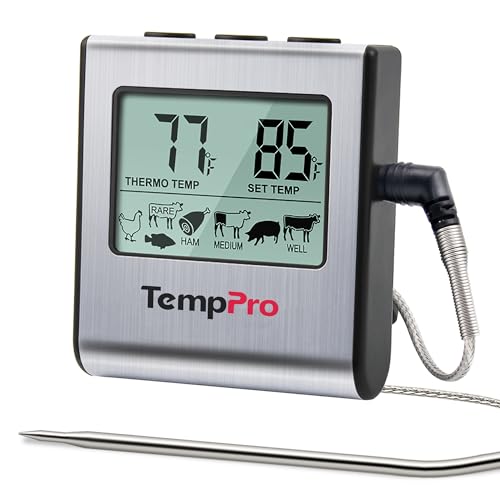
- A leave-in or instant-read meat thermometer; a probe that stays in the meat is far more useful for this cook
- A cutting board, a sharp long slicing knife and a cooler or insulated container for resting
Step 1: Trim and Season the Brisket
Start with the fat. Trim the hard fat cap down to about 1/4 inch and remove any loose, silver-skin membrane on the underside. Leave the fat cap on the top. It bastes the meat as it renders, and it helps keep the surface from drying out in a dry oven.
Next, season. Mix equal parts kosher salt and black pepper, then add a little garlic powder if you like. A common starting point is about 1 tablespoon of the mixture per pound of meat, though many cooks go heavier on the salt side of that range. Coat all sides, pressing the rub into the meat. Let the brisket sit uncovered in the refrigerator for at least 4 hours, or overnight, so the salt can penetrate.
Step 2: Set Up the Oven
Set the oven to 275°F. Lower temperatures, around 225°F, produce very tender results but stretch the cook past 12 hours for a larger cut. Higher temperatures, around 300°F, speed things up but leave less margin for error on the stall and on the finish.
Place a rack in the lower-middle position. Put the brisket fat side up in the roasting pan. If your pan is too small, trim the meat to fit rather than folding it, because folding causes uneven cooking. Pour about 1/2 cup of beef broth or water into the bottom of the pan. This is not a braise, but a little liquid helps humidity and keeps drippings from scorching.
Step 3: Cook to the Stall
Insert your probe into the thickest part of the flat, avoiding large pockets of fat and keeping the tip away from the pan. Close the oven door and leave it alone for the first few hours.
Around an internal temperature of 150°F to 170°F, the meat will plateau. This is the stall, caused by moisture evaporating from the surface and cooling the meat. It can last two to four hours. Don’t crank the heat to push through it. Instead, move to the next step.
Step 4: Wrap the Brisket
When the bark has set, a deep mahogany color with a dry surface, wrap the brisket tightly. Use two layers of heavy-duty foil, or pink butcher paper if you want to keep more of the bark crisp. Foil speeds up the cook and braises the meat slightly. Butcher paper lets moisture escape and keeps the surface firmer.
Return the wrapped brisket to the oven, fat side up, and keep the same 275°F setting. Continue cooking until the thickest part reaches about 195°F to 205°F. The probe should slide in and out with almost no resistance, like a warm stick of butter.
Cook Times and Targets at a Glance
These figures are general guidelines. Actual times vary with the cut, the thickness of the flat, how well your oven holds temperature and how often you open the door.
| Stage | Oven Temperature | Internal Temperature Target | Approximate Time |
|---|---|---|---|
| Initial cook, unwrapped | 275°F | Up to about 165°F | 4 to 6 hours |
| Stall (plateau) | 275°F | About 150°F to 170°F | 2 to 4 hours |
| Wrapped finish | 275°F | 195°F to 205°F | 2 to 4 hours |
| Rest | Off (wrapped in towels, in a cooler) | Holds above 140°F | At least 1 hour, up to 3 |
Step 5: Rest, Then Slice
Pull the brisket and let it rest. You can leave it on the counter loosely wrapped for about 30 minutes, but for longer rests, wrap it in clean towels and place it in an empty, preheated cooler. A rest of one to three hours lets the fat and juices redistribute and keeps the meat warm enough to slice cleanly.
When you slice, find the grain. On a flat, the muscle fibers run in one direction, and cutting across them produces tender slices. On a whole packer, the point and flat run in different directions, so separate them first. Slice about 1/4 inch thick for the flat and cut the point into thicker chunks or cubes for burnt ends.
Common Mistakes to Avoid
- Cooking by time alone. Brisket is done by feel and internal temperature, not by the clock. A 5-pound flat can finish well before or after the estimate.
- Cranking the heat during the stall. A higher oven temperature can dry the surface and toughen the bark. Be patient and let the stall pass.
- Skipping the overnight rub. Salt needs time to move into the meat. A quick rub right before cooking produces a surface-level seasoning.
- Wrapping too early. Foil before the bark sets can soften the crust. Wait until the surface looks dry and dark.
- Slicing too soon. Cutting straight out of the oven releases juices onto the board and leaves the slices dry. Rest first.
- Slicing with the grain. Long, chewy slices are almost always a sign of cutting in the wrong direction.
- Ignoring food safety. Don’t leave cooked brisket at room temperature for more than two hours. Refrigerate leftovers promptly in shallow containers.
Tips for a Better Oven Brisket
- Choose a flat with a consistent thickness. A uniform flat cooks more predictably than one tapering to a thin edge.
- Use a probe thermometer that alerts you when the meat hits your target. Checking the oven every hour is what makes this cook stressful.
- Add a few teaspoons of beef tallow or the rendered drippings to the wrap for extra flavor and moisture.
- If your oven runs hot or cold, use an oven thermometer on the rack to confirm the actual temperature.
- Make a double batch of the rub. Brisket leftovers make excellent sandwiches and tacos, and the seasoning keeps well in an airtight jar.
Recommended Gear
None of this gear is required, but a few items make the oven method noticeably easier to manage over a long cook.
- Dual-probe wireless or leave-in thermometer. Monitoring the internal temperature without opening the oven door keeps the heat steady. Check price on Amazon
- Heavy-duty roasting pan with a rack. A sturdy pan holds a full flat without warping and keeps the brisket lifted out of its drippings. Check price on Amazon
- Pink butcher paper. It’s the traditional choice for wrapping during the finish, allowing moisture to escape while protecting the bark. Check price on Amazon
- Long slicing knife. A long, thin blade lets you cut full-length slices in a single pass. Check price on Amazon
If you want to expand your cooking beyond brisket, How to BBQ Different Beef Cuts: From Brisket to Ribeye covers how to adapt the same principles to other cuts. For a broader set of starter recipes, Beginner BBQ Meat Recipes: Burgers, Chicken, Pork Shoulder and Steak is a good next read.
FAQ
Can I make brisket in the oven without a smoker?
Yes. A low oven setting around 275°F, a salt-and-pepper rub and a foil or butcher paper wrap will produce tender brisket. You won’t get a true smoke flavor, but you can add a small amount of smoked paprika to the rub for a similar note.
How long does oven brisket take?
A 4- to 6-pound flat typically takes 8 to 10 hours at 275°F, though the stall and the thickness of the meat can stretch that. Always go by internal temperature, aiming for 195°F to 205°F.
Should I cook brisket fat side up or down?
Fat side up is the usual choice for oven cooking. The rendering fat bastes the meat as it cooks, and the top layer shields the surface from drying out.
Why is my oven brisket tough?
The most common causes are pulling it before it reaches around 195°F, not resting it long enough, or slicing with the grain. Check the probe feel, rest for at least an hour, and slice across the muscle fibers.
Is it safe to rest brisket for several hours?
A wrapped brisket held in a cooler with towels can stay warm for several hours and remain above 140°F. Food safety guidance from the USDA recommends keeping hot food above 140°F during holding. If you have questions about holding or storing large amounts of food for an event, check with your local food safety authority.
Related reading
Ready to choose one?
About Claire Whitaker
Claire Whitaker is part of our editorial team and reviews and edits our BBQ & grilling guides, checking product details against manufacturer specifications and owner feedback.