
 By Miles Sinclair
Updated November 2026
If you want to know how long to oven bake brisket, the honest answer is that it depends on the weight of the cut, the oven temperature you choose and whether the meat is wrapped. A typical flat-cut brisket at 275°F to 300°F takes roughly 1 to 1.5 hours per pound, while the whole packer cut can run longer. The books below were selected for readers who want reliable, detailed brisket instruction, and they are grouped by what each one helps you do, from basic oven roasting to competition-level smoking and braising.
Our top picks at a glance
- 1
 TOP CHOICEBest overallLone Star Brisket: A Step by Step Guide on How to Smoke BrisketView on Amazon
- 2
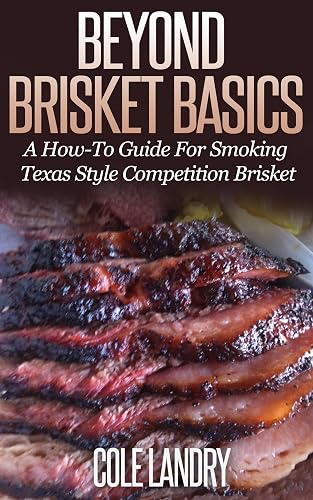 TOP CHOICEBest for beginnersBeyond Brisket Basics: A How-To Guide On Smoking Texas Style Competition BrisketView on Amazon
- 3
 TOP CHOICEBest for a complete referenceThe Brisket Chronicles: How to Barbecue, Braise, Smoke, and Cure the WView on Amazon
- 4
 Best for broader smoking skillsProject Smoke: Seven Steps to Smoked Food Nirvana, Plus 100 IrresistibView on Amazon
- 5
 Best budget pickBeef Brisket RecipesView on Amazon
- 6
 Best for advanced cooksTexas Brisket Made Easy: How To Climb The Mt. Everest Of Barbecue (Deep Dive Guide Book 6)View on Amazon
Our Top Picks
These picks were chosen by checking listing details, publisher reputation and the kinds of feedback owners commonly leave about each title. The selection favors books that explain timing, temperature and doneness clearly, since those are the points where oven brisket most often goes wrong. We did not test any of these books or cook from them ourselves.
Quick Comparison
| Product | Best for | Key feature |
|---|---|---|
| Lone Star Brisket | Overall step-by-step learning | Stepwise method for smoking brisket |
| Beyond Brisket Basics | Beginners | How-to guide on Texas-style brisket |
| The Brisket Chronicles | A complete reference | Covers barbecue, braising, smoking and curing |
| Project Smoke | Broader smoking skills | Seven-step smoking method plus 100 recipes |
| Beef Brisket Recipes | Budget-minded cooks | Focused collection of brisket recipes |
| Texas Brisket Made Easy | Advanced cooks | Deep-dive guide to barbecue brisket |
Lone Star Brisket: A Step by Step Guide on How to Smoke Brisket
Lone Star Brisket: A Step by Step Guide on How to Smoke Brisket
Best for: Readers who want a clear, sequential method they can follow from trimming to resting.
This title suits first-time brisket cooks who want to understand the full process before buying equipment. Its step-by-step framing maps well onto oven cooking, since the same principles of trimming, seasoning, low-temperature cooking and resting apply.
Key specs
- Format: step-by-step instructional guide
- Subject: smoking brisket from preparation through finishing
Pros
- Sequential structure is easy to follow
- Covers preparation, which many beginners skip
- Principles transfer to oven cooking
Cons
- Focused on smoking, so oven-specific timing is limited
- Less depth for advanced techniques
Bottom line: A strong first read for anyone who wants a dependable process before tackling oven or smoker brisket.
Beyond Brisket Basics: A How-To Guide On Smoking Texas Style Competition Brisket
Beyond Brisket Basics: A How-To Guide On Smoking Texas Style Competition Brisket
Best for: Beginners who want Texas-style fundamentals without wading through competition-only detail.
The title signals a basics-first approach, which is useful if you are deciding between oven and smoker methods. Texas-style technique emphasizes low, steady heat and patience, the same habits that make oven brisket succeed.
Key specs
- Format: how-to guide
- Style: Texas-style brisket
Pros
- Focused on fundamentals
- Texas-style approach is well documented
- Good starting point for timing concepts
Cons
- Competition emphasis may exceed home-cook needs
- Oven-specific guidance is not the main focus
Bottom line: Best for cooks who want to learn Texas-style fundamentals and then adapt them to the oven.
The Brisket Chronicles: How to Barbecue, Braise, Smoke, and Cure the World’s Most Epic Cut of Meat (Steven Raichlen Barbecue Bible Cookbooks)
The Brisket Chronicles: How to Barbecue, Braise, Smoke, and Cure the World's Most Epic Cut of Meat (Steven Raichlen Barbecue Bible Cookbooks)
Best for: Cooks who want several methods, including braising, in one reference.
Because the title covers braising alongside smoking and curing, this book is useful if you plan to cook brisket in a covered oven pan rather than uncovered. Multiple methods let you compare results and choose the right one for your equipment.
Key specs
- Format: cookbook
- Methods covered: barbecue, braising, smoking, curing
Pros
- Covers several cooking methods
- Part of a well-known barbecue series
- Useful for comparing oven and smoker results
Cons
- Broad scope means less depth on any single method
- Recipes may assume some prior experience
Bottom line: A good all-around choice for cooks who want braising and oven methods alongside smoking.
Project Smoke: Seven Steps to Smoked Food Nirvana, Plus 100 Irresistible Recipes from Classic (Slam-Dunk Brisket) to Adventurous (Smoked Bacon-Bourbon … (Steven Raichlen Barbecue Bible Cookbooks)
Project Smoke: Seven Steps to Smoked Food Nirvana, Plus 100 Irresistible Recipes from Classic (Slam-Dunk Brisket) to Adventurous (Smoked Bacon-Bourbon … (Steven Raichlen Barbecue Bible Cookbooks)
Best for: Readers who want brisket alongside a wide range of smoked foods.
This book is a fit for cooks who already own a smoker or pellet grill and want to expand beyond brisket. The seven-step framework gives a repeatable method that can be adapted to oven cooking.
Key specs
- Format: cookbook with seven-step method
- Recipe count: about 100 (per listing title)
Pros
- Large recipe collection
- Includes a classic brisket recipe
- Method-focused structure
Cons
- Brisket is one topic among many
- Smoker-oriented, so oven timing needs adapting
Bottom line: Ideal if you want brisket plus many other smoked recipes in one volume.
Beef Brisket Recipes
Beef Brisket Recipes
Best for: Budget-minded cooks who want a focused collection of brisket recipes.
A single-subject recipe book is a practical choice if you mainly want brisket dishes and do not need smoking theory. It suits home cooks who will be doing most of their brisket in the oven.
Key specs
- Format: recipe collection
- Subject: beef brisket
Pros
- Focused on brisket only
- Recipe-first approach is easy to use
- Good for oven-based dishes
Cons
- Limited technical explanation
- Timing and doneness guidance may be brief
Bottom line: Suited to cooks who want practical recipes and plan to use a thermometer for doneness.
Texas Brisket Made Easy: How To Climb The Mt. Everest Of Barbecue (Deep Dive Guide Book 6)
Texas Brisket Made Easy: How To Climb The Mt. Everest Of Barbecue (Deep Dive Guide Book 6)
Best for: Experienced cooks who want an in-depth guide to difficult brisket technique.
The deep-dive framing suggests more technical detail on temperature control and stall management, which matters when cooking a large cut in an oven. It is better suited to cooks who already understand the basics.
Key specs
- Format: deep-dive guide (book 6 in its series)
- Subject: Texas-style barbecue brisket
Pros
- In-depth technical focus
- Addresses challenging parts of the cook
- Useful reference for troubleshooting
Cons
- May be too advanced for beginners
- Series format assumes familiarity with earlier titles
Bottom line: A good pick once you have cooked brisket a few times and want to refine results.
Buying Guide
Before choosing a book or a method, it helps to understand the variables that control how long brisket takes in the oven. The factors below will also help you judge which title fits your situation.
Cut and weight
A whole packer brisket usually includes both the flat and the point, and it can weigh 12 to 16 pounds. A flat cut is leaner and cooks faster. Weight is the single biggest factor in total time, so look for guidance that gives times per pound.
Good picks for this: Lone Star Brisket, Beef Brisket Recipes
Oven temperature
Low, steady heat around 275°F to 300°F is the most common approach for tender brisket. Higher temperatures shorten cooking time but can dry the meat. Choose a resource that explains how temperature changes the timeline.
Good picks for this: Beyond Brisket Basics, The Brisket Chronicles
Wrapping and the stall
Brisket often stalls as its internal temperature plateaus, commonly in the 150°F to 170°F range. Wrapping in foil or butcher paper can move it past the stall. Good guidance explains when and how to wrap.
Good picks for this: Texas Brisket Made Easy, Project Smoke
Doneness and internal temperature
Time estimates are only a guide. Brisket is usually done when a probe slides in with little resistance, often between about 195°F and 205°F. Relying on temperature rather than the clock prevents overcooking.
Good picks for this: Lone Star Brisket, Texas Brisket Made Easy
Resting time
Resting for at least one hour, wrapped and held in a cooler or warm oven, lets juices redistribute. Some cooks rest longer. Look for resources that include this step in their overall timeline.
Good picks for this: Beef Brisket Recipes, The Brisket Chronicles
Skill level and scope
A beginner needs clear sequencing, while an experienced cook may want technical depth. A book that covers too much can dilute oven-specific timing, while one that covers too little may leave gaps.
Good picks for this: Beyond Brisket Basics, Project Smoke
Durability and care of the cook
A good brisket book is a reference you will return to. Look for clear indexing, temperature charts and recipe layouts that are easy to follow while your hands are busy.
Good picks for this: The Brisket Chronicles, Texas Brisket Made Easy
FAQ
How long does brisket take to bake in the oven?
At 275°F to 300°F, plan roughly 1 to 1.5 hours per pound for a flat cut, and expect longer for a whole packer brisket. Total time varies with thickness, fat cap and wrapping, so use internal temperature as your final check.
How long to bake a brisket in the oven at 250°F?
At 250°F, cooking takes longer than at 275°F or 300°F, often 1.5 to 2 hours per pound. Lower heat gives more gradual rendering but extends the stall, so allow extra time.
How long to bake brisket in oven at 325°F?
At 325°F, brisket cooks faster, often finishing in roughly 1 hour per pound or a bit less. Higher heat increases the risk of drying, so check internal temperature earlier than you would at lower settings.
What internal temperature should oven brisket reach?
Most cooks aim for about 195°F to 205°F, where the connective tissue has broken down and a probe slides in easily. Some cuts finish a few degrees outside this range, so feel for tenderness as well.
Should I wrap brisket in foil when baking it?
Wrapping can speed things up and help the brisket get past the stall. Foil retains more moisture, while butcher paper preserves some bark texture. Wrap once the surface has developed color, usually after several hours.
Can I cook brisket in the oven without a thermometer?
It is possible, but risky, because time alone is unreliable with brisket. A leave-in or instant-read meat thermometer is strongly recommended for consistent results.
Is it safe to eat brisket cooked to a lower temperature?
Beef should be cooked to safe minimum temperatures, and brisket is typically taken well above the USDA recommendation of 145°F for whole cuts, with a final temperature near 195°F to 205°F for tenderness. If you have concerns about food safety or a health condition, consult a qualified professional.
Conclusion
For most readers asking how long to oven bake brisket, the answer comes down to weight, temperature and internal doneness rather than a fixed clock. Lone Star Brisket and Beyond Brisket Basics give clear, sequential learning for newcomers. The Brisket Chronicles and Project Smoke suit cooks who want several methods and recipes in one place. Beef Brisket Recipes is a practical, focused choice for budget-minded cooks, and Texas Brisket Made Easy fits experienced cooks who want deeper technical detail on the stall and temperature control.
Sources
- Safe minimum internal temperatures for cooking beef and other meats (usda.gov)
- Food safety guidance on handling and cooking raw meat (fsis.usda.gov)
Before you buy: helpful guides
Related reading
- Smoke a Brisket Time: How Long to Plan for a Juicy Result (2026)
- How to Roast Brisket in Oven: A Step-by-Step Guide for Tender Results
About Miles Sinclair
Miles Sinclair is part of our editorial team and reviews and edits our BBQ & grilling guides, checking product details against manufacturer specifications and owner feedback.



