By Claire Whitaker
Updated November 2026
Shopping for a smoked BBQ brisket rub usually means balancing three things: how well the seasoning builds bark, how much smoke and pepper it brings to the meat, and whether it works beyond brisket. This list is built on those criteria, using manufacturer specifications, brand reputation within the barbecue community and patterns that appear again and again in owner feedback. Nothing here comes from personal testing, so treat the notes as a guide to what each rub is designed for rather than a verdict on how it cooks.
Best overall: Smoke Trails BBQ Brisket Rub – View on Amazon
Best for classic Texas-style brisket: Texas-Made Classic Coarse Rub – View on Amazon
Best budget pick: Amazon Grocery Smoked BBQ Rub & Seasoning – View on Amazon
Best for competition-style flavor: Heath Riles BBQ Rub Honey Seasoning – View on Amazon
Best for a sweet smoke profile: McCormick Grill Mates Applewood Rub – View on Amazon
Best for experimenting with beer flavors: Spiceology Beer-Infused BBQ Rub Set – View on Amazon
Our Top Picks
Quick Comparison
| Product | Best for | Key feature |
|---|---|---|
| Smoke Trails BBQ Brisket Rub | Texas-style brisket with a balanced crust | Brisket-specific blend by Steve Gow |
| Texas-Made Classic Coarse Rub | Coarse-texture bark on beef | Coarse grind with activated charcoal, MSG free |
| Amazon Grocery Smoked BBQ Rub & Seasoning | Everyday smoking on a budget | Large 25 oz container |
| Heath Riles BBQ Rub (Honey) | Competition-style sweet and savory bark | Championship recipe with honey notes |
| McCormick Grill Mates Applewood Rub | Mild smoky flavor for beginners | Applewood smoke flavor profile |
| Spiceology Beer-Infused BBQ Rub Set | Trying multiple flavor profiles | Four-pack with beer-infused blends |
Smoke Trails BBQ Brisket Rub | BBQ Rub for Texas Brisket by Steve Gow

Smoke Trails BBQ BRISKET RUB | BBQ Rub for Texas Brisket by Steve Gow | Great on Brisket, Beef Short Ribs, Steaks, and more
Best for: Texas-style brisket with a balanced, peppery crust
This rub is named for brisket and is marketed by its creator as a Texas brisket seasoning. It suits cooks who want one dedicated rub for a whole packer and are happy to use it on other beef cuts as well.
Key specs
- Designed specifically for brisket
- Also listed for beef short ribs and steaks
- Developed by pitmaster Steve Gow
Pros
- Built around the brisket use case rather than general seasoning
- Owners often report a good, dark bark on long smokes
- Versatile enough for other beef cuts
Cons
- Pepper-forward profile may be strong for some palates
- Less suited to pork or chicken than general-purpose rubs
Bottom line: A strong first choice for cooks who want a brisket-focused rub with a classic Texas profile.
Texas-Made Classic Coarse Rub with Activated Charcoal

Hardcore CarnivoreTexas-Made Classic Coarse Rub with Activated Charcoal – Blend for Steak, Brisket, Burgers, BBQ, Grilling and Smoking MSG Free Black | All-Purpose Beef Seasoning Rub, 13oz Shaker
Best for: Coarse-texture bark on beef, especially brisket and steak
A coarse-ground, all-purpose beef seasoning aimed at cooks who want visible pepper and salt texture on the surface of the meat.
Key specs
- Coarse grind
- Contains activated charcoal, per the product name
- MSG free
- 13 oz shaker
Pros
- Coarse texture helps build a visible crust
- MSG-free formulation
- Works on steak, burgers and brisket alike
Cons
- Activated charcoal gives a dark color that not everyone likes on the surface
- Coarse texture can be uneven on thin cuts
Bottom line: Good for cooks who prefer a coarse, peppery crust and want a rub that also works on steaks and burgers.
Amazon Grocery Smoked BBQ Rub & Seasoning, 25 Oz
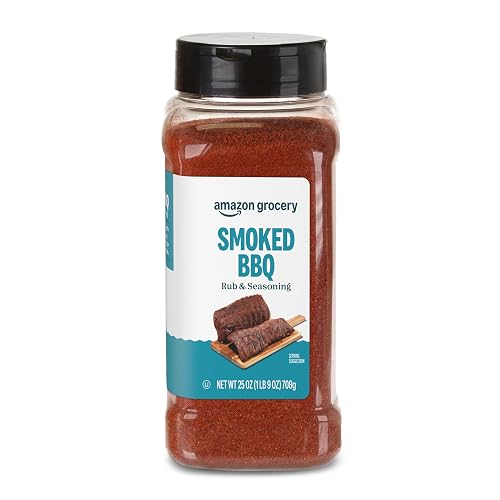
Amazon Grocery, Smoked BBQ Rub & Seasoning, 25 Oz
Best for: Everyday smoking on a budget
A large-format smoked BBQ seasoning for cooks who go through a lot of meat and want a single container that covers brisket, pork and chicken.
Key specs
- 25 oz container
- Smoked BBQ flavor profile
Pros
- Large container suits frequent smokers
- General smoked flavor works across proteins
- Straightforward, no-frills seasoning
Cons
- Less brisket-specific than dedicated brisket rubs
- Limited detail in the listing about exact ingredients and salt level
Bottom line: A sensible budget option for cooks who want a large, general smoked rub rather than a brisket-specific blend.
Heath Riles BBQ Rub Seasoning for Smoking & Grilling – Honey BBQ Seasoning

BBQ Rub Seasoning for Smoking & Grilling – Dry Rub for Ribs, Pork, Brisket & Chicken, 80+ BBQ Championships, 8 oz Heath Riles BBQ Rub – Honey BBQ Seasoning – Championship Recipe
Best for: Competition-style sweet and savory bark
A championship-style rub from a well-known competition pitmaster, built for cooks who want a sweeter, caramelized crust on brisket, ribs and pork.
Key specs
- 8 oz container
- Honey BBQ flavor profile
- Listed for ribs, pork, brisket and chicken
Pros
- Sweet-savory balance suits a caramelized bark
- Competition heritage appeals to cooks who follow contest-style recipes
- Works across several proteins
Cons
- Sugar content can burn on long, hot cooks if not managed
- The smaller 8 oz size goes quickly on a full packer
Bottom line: Best for cooks who like a sweeter competition-style bark and are willing to watch temperature closely.
McCormick Grill Mates Applewood Rub, 10 oz

McCormick Grill Mates Applewood Rub, 10 oz
Best for: Mild smoky flavor for beginners
A widely available grocery-store rub with an applewood smoke profile, suited to cooks who want a gentle smoky flavor without heavy pepper or heat.
Key specs
- 10 oz container
- Applewood smoke flavor
Pros
- Mild, approachable flavor for first-time brisket cooks
- Easy to find and familiar brand
- Works on many meats beyond brisket
Cons
- Flavor may be too light for a full Texas-style bark
- Smaller container than bulk options
Bottom line: A low-risk starting point for beginners who want a mild smoky seasoning.
Spiceology Derek Wolf 4-Pack Beer-Infused BBQ Rub Set

Sticky Bourbon Brown Ale, Sweet Carolina Blonde, Garlic Chile Lager, Big Bad BBQ Ale Spiceology Derek Wolf 4-Pack Beer-Infused BBQ Rub Set
Best for: Trying multiple flavor profiles
A four-pack of beer-infused rubs, useful for cooks who want to rotate flavors across brisket, ribs and other smoked meats.
Key specs
- Four-pack set
- Beer-infused blends, including Sticky Bourbon Brown Ale, Sweet Carolina Blonde, Garlic Chile Lager and Big Bad BBQ Ale
Pros
- Four distinct profiles in one purchase
- Good way to compare flavors side by side
- Beer-based flavors add a distinct malt and sugar note
Cons
- Beer and sugar notes can darken quickly on long cooks
- Multiple small containers may not suit cooks who want one main rub
Bottom line: Ideal for adventurous cooks who want to experiment with flavor rather than settle on one rub. 6 Best Smoked Beef Brisket Electric Smoker Picks for Home Cooks goes further into this.
Buying Guide
Flavor profile: pepper, sweet, smoky or heat
Brisket rubs generally fall into a few families: black pepper and salt Texas-style blends, sweeter competition-style rubs, smoke-forward blends and hotter versions. Decide what kind of bark you want before you shop. Pepper-forward rubs suit traditional Texas brisket, while sweet rubs caramelize and need closer temperature management.
Good picks for this: Smoke Trails BBQ Brisket Rub, Heath Riles BBQ Rub (Honey)
Grind and texture
Coarse rubs create a more visible, crunchy crust, while finer rubs tend to blend into the surface and build a smoother bark. Coarse texture is often preferred for brisket because it holds up over long smokes and gives the bark its characteristic look.
Good picks for this: Texas-Made Classic Coarse Rub, Smoke Trails BBQ Brisket Rub
Salt and sugar content
Salt and sugar levels affect both flavor and bark color. High sugar can scorch during long, hot cooks, while a well-balanced salt level helps the meat taste seasoned without needing extra salt. Check the ingredient list if you are managing sodium or sugar in your diet.
Good picks for this: Amazon Grocery Smoked BBQ Rub, McCormick Grill Mates Applewood Rub
Container size and value per use
A packer brisket typically takes a generous coating, so a larger container suits regular smokers. Smaller containers are better for trying a new blend without committing to a big supply. Think about how often you cook and how many pounds of meat you season at a time.
Good picks for this: Amazon Grocery Smoked BBQ Rub, Spiceology Derek Wolf 4-Pack
Versatility across proteins
If you season ribs, pork and chicken alongside brisket, a general-purpose rub saves storage space and reduces the number of containers you need. Dedicated brisket rubs usually perform best on beef but may be less balanced on poultry.
Good picks for this: Heath Riles BBQ Rub (Honey), Amazon Grocery Smoked BBQ Rub
Ingredient transparency and dietary needs
Some cooks avoid MSG or specific additives. Listings for rubs like the coarse Texas-made blend specify certain ingredients, so compare labels carefully if you have allergies or sensitivities. If you have a medical dietary restriction, check labels closely and consult a registered dietitian or your physician.
Good picks for this: Texas-Made Classic Coarse Rub, McCormick Grill Mates Applewood Rub
Storage and shelf life
Dry rubs keep best in a cool, dry, dark place in a tightly sealed container. Moisture causes clumping and can dull the flavor of spices over time. Buying a size you can finish within a reasonable period usually gives better flavor than a large container that sits open for months.
Good picks for this: McCormick Grill Mates Applewood Rub, Spiceology Derek Wolf 4-Pack
FAQ
How much rub should I use on a brisket?
A common approach is a thin, even coat that covers the surface without clumping, often applied the night before cooking. Many pitmasters season the whole packer generously, then trim excess from thick spots if the bark looks too heavy. A related read: Cost of Beef Brisket: 7 Best Picks Compared for Every Budget.
Should I apply the rub before or after binding with mustard?
Many cooks apply a thin layer of yellow mustard or another binder first, then season. The binder helps the rub adhere but does not add much flavor because it cooks off during the smoke.
Why does my brisket bark taste bitter?
Bitterness often comes from scorched sugars or spices, especially in sweeter rubs, or from burnt pepper on long, hot cooks. Keeping the smoker temperature steady and using a rub with balanced sugar content usually helps.
Can I use a brisket rub on pork or chicken?
Yes, many cooks do. Dedicated brisket rubs are usually built for beef, so a general-purpose rub may be a better match for pork or chicken. Taste a small amount first if the rub is strongly pepper-forward or sweet.
Do I need to rest the rub before smoking?
Resting seasoned brisket for a few hours or overnight in the refrigerator lets the salt penetrate the meat and helps form a tacky surface for the rub. This is a common practice, though preferences vary.
How long should I smoke brisket with a dry rub?
Cook times depend on the size of the brisket, the smoker temperature and how the meat responds. Many cooks target an internal temperature in the range of about 200 to 205°F for a tender finish, but use a reliable meat thermometer and the feel of the probe rather than relying on time alone.
Conclusion
For a dedicated Texas-style brisket rub, the Smoke Trails blend is the most brisket-focused option on this list. Cooks who want a coarse, peppery crust that also works on steaks should look at the Texas-made coarse rub. The Amazon Grocery smoked rub suits budget-minded cooks who smoke often, while the Heath Riles honey rub fits those who prefer a sweeter competition-style bark. The McCormick applewood rub is a mild starting point, and the Spiceology four-pack is best for cooks who want to compare several flavor profiles. Match the rub to the bark you want, the meats you cook and how often you smoke.
Sources
- Food safety guidance on cooking temperatures for beef and pork (usda.gov)
- Information on food labeling, ingredients and additives such as MSG (fda.gov)
- Research-based cooking and food preservation guidance from land-grant university extension programs (extension.org)
Before you buy: helpful guides
- Best BBQ Ribs Rub Recipe: A Step-by-Step Guide for Smoked and Grilled Ribs
- Killer Hogs BBQ Rub: How to Use It on Ribs, Brisket and Pork
- Smoked Paprika BBQ Rub: Why It Tastes Bitter and How to Fix It
- Killer Hogs Hot BBQ Rub: How to Use It on Ribs, Pork and Brisket
- Weber Kansas City BBQ Rub: How to Use It for Ribs, Brisket and Pork
Related reading
- Tuffy Stone BBQ Rub Compared: 7 Best Picks for Ribs and Brisket
- Trade East Classic BBQ Rub: 7 Best Picks Compared for Ribs and Brisket
About Claire Whitaker
Claire Whitaker is part of our editorial team and reviews and edits our BBQ & grilling guides, checking product details against manufacturer specifications and owner feedback.