

As an Amazon Associate I earn from qualifying purchases. This page may contain affiliate links.
The meat church bbq rub combo on this listing pairs two of the best-known seasonings from Matt Pittman’s Meat Church line: Holy Cow and Holy Gospel, one bottle of each. It is aimed at backyard cooks who want a reliable beef and pork seasoning without mixing their own blends from scratch, and at pitmasters who already like the Meat Church flavor profile and want to try both staples at once. Shoppers who prefer very low sodium, who want a sugar-free rub, or who are looking for a single all-purpose seasoning for fish and delicate vegetables may be better served elsewhere. This review is based on the product listing, manufacturer information and patterns in publicly shared owner feedback. It is not based on hands-on testing.
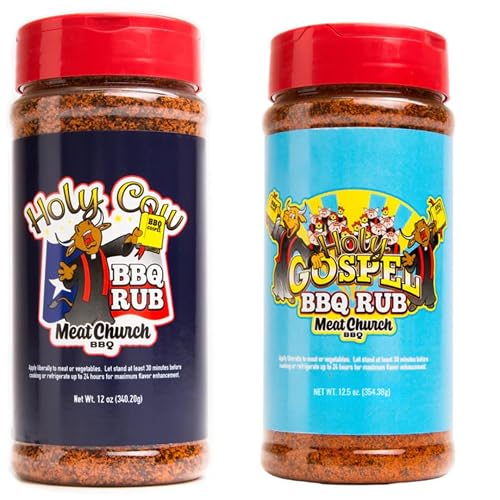
Meat Church BBQ Rub Combo: Holy Cow (12 oz) and Holy Gospel (12.5 oz), One Bottle of Each
Product Overview
Meat Church is a barbecue brand built around competition-style seasonings and sauces. Holy Cow is the brand’s most widely recognized all-purpose beef rub. It is generally described as a coarse, savory blend with a noticeable pepper presence and a background of sweetness and garlic, designed to build bark on brisket, steaks and burgers. Holy Gospel is positioned as a versatile rub for pork, chicken and general smoking, with a more balanced profile that leans toward sweet and savory notes rather than heavy heat.
Buying them together as a combo makes sense if you want to cover most of a typical backyard menu with two containers. Holy Cow handles red meat, while Holy Gospel handles pork shoulder, ribs, chicken thighs and similar cuts. Each bottle in this listing is sold in a shaker-style container, which is convenient for seasoning at the grill or on the cutting board, and the listing states the net weights of 12 ounces for Holy Cow and 12.5 ounces for Holy Gospel.
If you are new to dry rubs, it helps to understand what the product is doing. A rub is a mix of salt, sugar, spices and sometimes dehydrated aromatics. Salt draws moisture to the surface and helps form a seasoned crust. Sugar helps with caramelization and bark color. Pepper and paprika contribute flavor and visual depth. A good commercial rub balances these so the meat tastes better without tasting only of spice.
Key Features & Specifications
The table below lists what the product name and listing make clear. Where a detail is not stated in the listing, it is left out rather than guessed.
| Feature | Details |
|---|---|
| Brand | Meat Church |
| Product type | BBQ dry rub combo (two seasonings) |
| Included blends | Holy Cow and Holy Gospel |
| Quantity in set | One bottle of each |
| Holy Cow net weight | 12 oz |
| Holy Gospel net weight | 12.5 oz |
| Intended uses | Beef, pork, chicken, general grilling and smoking |
| Form | Dry granulated seasoning |
| ASIN | B094GK67RH |
Manufacturers in this category typically recommend applying rub generously, often as a light coating of oil or mustard binder first, then letting the seasoning sit for at least 30 minutes before cooking. For long smokes such as brisket or pork shoulder, many pitmasters season the night before. Always check the packaging for the brand’s current directions, as recommendations can change between formulations.
Pros & Cons
Pros
- Two well-regarded flavor profiles in one order, covering beef and pork-chicken use cases.
- Shaker containers make it easy to season evenly and to store the rub at the grill.
- Holy Cow is a common choice for brisket and steak, which suits Texas-style and beef-focused cooks.
- Holy Gospel offers a more balanced sweet-savory profile that many owners use on ribs and chicken.
- Useful for trying the Meat Church line before committing to larger sizes.
Cons
- The rubs are seasoned for bold flavor and are not designed for low-sodium diets.
- Holy Cow’s pepper and garlic profile may be too strong for mild palates or delicate fish.
- Owners who prefer a sugar-free rub will need to look at other options.
- Two bottles cost more upfront than one all-purpose rub, and you may use one blend far more than the other.
- Commercial rubs vary in grind and moisture over time, so older bottles may clump if stored in humid conditions.
Performance Analysis
Because this is a research-based review, performance is assessed through the product’s stated purpose, its ingredient style as commonly described, and recurring themes in owner discussions rather than through personal cooking trials.
Bark and crust formation
Most owner discussions around Holy Cow focus on bark. The coarse texture and sugar-salt balance are commonly credited with producing a dark, well-seasoned crust on brisket and beef ribs. Cooks who apply it in a thick, even layer and let it rest tend to report the most consistent results. Holy Gospel is more often discussed in the context of pork shoulder and chicken, where a sweeter crust and a mild char are the goal.
Flavor balance
Owners commonly describe Holy Cow as savory and peppery, with enough sweetness to round out the heat. Holy Gospel is usually described as the more approachable of the two, suitable for kids and guests who do not want a lot of bite. Neither is typically described as overwhelmingly salty when used at standard rates, though salt tolerance varies by person.
Versatility
Beyond beef and pork, cooks report using these blends on turkey, burgers, roasted vegetables and even eggs. This kind of versatility is a practical advantage, though the flavor profiles are designed mainly for meat and will not suit every dish.
Limitations
Dry rubs are a matter of taste, and no rub will please every palate. The heavier pepper presence in Holy Cow can overwhelm lighter proteins. Sugar content can also cause burning on high-heat direct grilling if the rub is applied too thickly, a point many owners mention when moving from low-and-slow smoking to hot grilling.
Who Should Buy This Product?
This combo fits best for cooks who regularly smoke or grill beef and pork and want two proven, widely used seasonings in one purchase. It is a particularly good fit for brisket enthusiasts who want Holy Cow on hand and for families who cook a range of meats and want a milder option like Holy Gospel for chicken and ribs.
It is less suitable for people who must limit sodium, who avoid sugar, who cook mostly seafood, or who want a single rub for everything and do not want to manage two containers. Those cooks should consider a low-sodium or sugar-free rub or a more neutral all-purpose blend.
If you are a health-conscious cook, a registered dietitian or your doctor can help you decide how often a salty, sugary rub fits your eating plan.
Buying Guide
Before buying any barbecue rub, consider the following factors. These points apply whether you choose this combo or another product.
- Your main proteins. Beef-heavy cooks will get the most from a brisket-oriented rub. Pork and poultry cooks may prefer a sweeter, more versatile blend.
- Heat level. Read the heat description carefully. Pepper-forward rubs suit adventurous eaters, while mild blends work better for family meals.
- Sugar and sodium. If you have dietary restrictions, check the label for sugar and sodium content. Many rubs list these values per serving.
- Grind and texture. Coarse rubs build bark, while finer rubs adhere better to thin cuts and chicken skin.
- Container and size. Shakers are convenient, while larger bags or tubs are more economical for heavy users.
- Brand reputation. Established competition brands are widely discussed by owners, which can help you judge consistency.
Alternatives worth considering
If you want a sweet and spicy option built for a different style of cooking, the Meat Church Honey Hog combo pairs the brand’s honey-forward Honey Hog with a hotter variant and is commonly used on pork and chicken.

Meat Church Honey Hog BBQ Rub Combo: Honey Hog (14 oz) and Honey Hog Hot (13 oz) BBQ Rub and Seasoning for Meat and Vegetables, Gluten Free, One Bottle of Each
For a Kansas City-style alternative with a broad all-purpose profile, Killer Hogs Championship Barbecue Spice Blend is a well-known option that owners often use across beef, pork and chicken.

Championship Barbecue Spice Blend for Beef, Steak, Ribs, Burgers, Pork and Chicken, Convenient Shaker Container Killer Hogs The BBQ Rub, Grill and Smoking Seasoning, 11 oz
Cooks who want to make their own blend can also start from a homemade base. See How to Make a Dry Rub for BBQ from Scratch for a basic framework, or compare styles in 8 Best BBQ Rubs for Beef: Expert Picks for Brisket, Steaks and Ribs.
FAQ
Is the meat church bbq rub combo good for brisket?
Holy Cow is the component most often discussed for beef, including brisket. Owners generally use it as a coarse, peppery base for building bark. For a Texas-style approach, many cooks pair it with a simple salt and pepper layer underneath.
Can I use these rubs on chicken and pork?
Yes. Holy Gospel is positioned as the more versatile of the two and is commonly used on pork shoulder, ribs and chicken. It is wise to apply it to chicken skin with a light oil binder for better adhesion.
Are these rubs low sodium?
No. Commercial rubs of this style are seasoned for flavor and generally contain meaningful amounts of salt. Check the nutrition panel on the package and consult a healthcare professional if you need to restrict sodium.
Are they sugar free?
Not in the sense of a sugar-free diet. Rubs in this category typically contain sugar for bark development. Look for dedicated sugar-free blends if this matters to you.
How much rub should I use?
Manufacturers commonly suggest a generous, even coating. A reasonable starting point for a pork shoulder or brisket is a thin but complete layer across all surfaces, adjusted to taste after one cook.
How should I store the rub?
Keep the containers tightly closed in a cool, dry place away from direct heat or steam. Humidity causes clumping and can reduce flavor over time.
Is it worth buying the combo instead of one bottle?
It depends on your menu. If you cook both beef and pork regularly, owning both blends can be practical. If you mostly cook one type of meat, a single bottle may be the better choice.
Final Verdict
The meat church bbq rub combo of Holy Cow and Holy Gospel is a sensible pick for cooks who want two established barbecue seasonings covering beef and pork-and-poultry cooking. Holy Cow suits brisket and steaks, while Holy Gospel offers a more approachable profile for chicken and ribs. It is not a low-sodium or sugar-free product, and its bold flavors will not suit every dish. For cooks who want that Meat Church flavor in a single, convenient order, this combo is a solid choice. Review the current listing and label before buying.
Related reading
- 5 Best Honey Hog Hot BBQ Rub Options for Smoked Meats (2026)
- Ultimate BBQ Pork Rub Recipe: Step-by-Step for Ribs and Shoulder
- Trader Joe's BBQ Rub: 7 Best Picks for Every Pitmaster (2026)
- Sugar Free BBQ Rub: How to Make One That Tastes Great (2026)
- Plowboys BBQ Yardbird Rub: 10 Best Picks for Chicken and Beyond (2026)



